
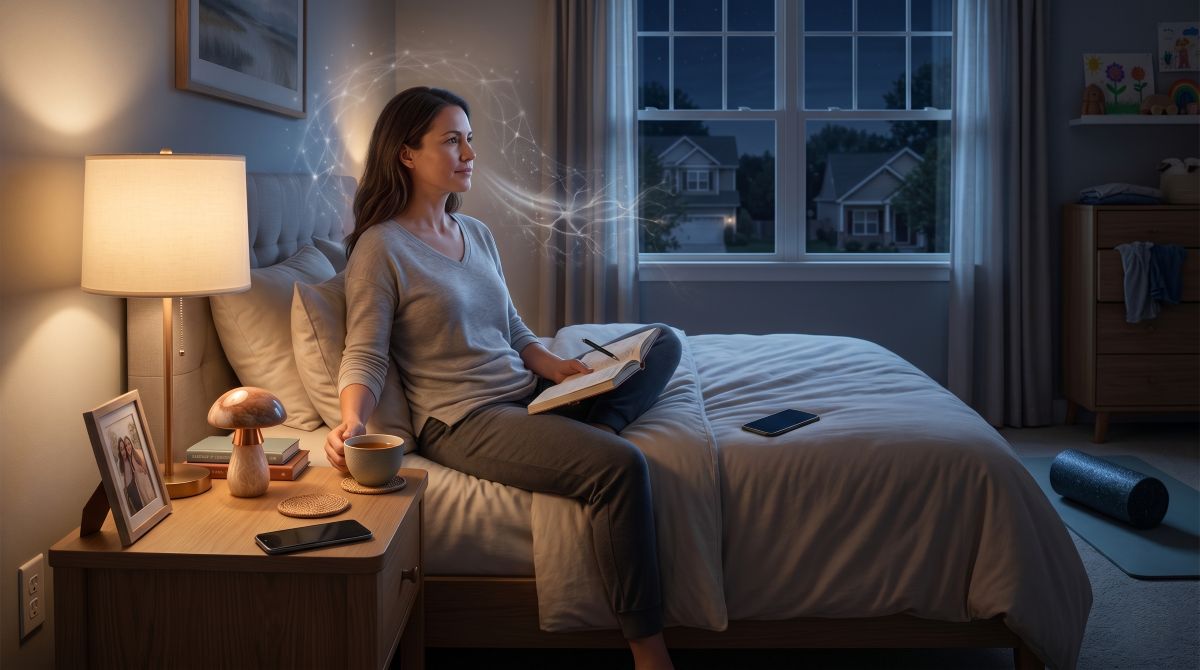
Revenge Bedtime Procrastination: Breaking the Cycle
Key Takeaways:
- Add nervous system regulation angle – Explain how stress keeps you wired at night and how to actually downregulate (not just “relax”)
- Plant medicine for sleep support – MAJOR differentiator: psilocybin’s effects on sleep patterns and evening wind-down (NO competitor covers this)
- Intentional evening rituals vs doom-scrolling – Specific practices that replace phone time with actual nourishment
- Creating daytime “me time” – Address root cause by reclaiming time earlier, not just managing symptoms
- Mom-specific pressures – Why mothers fall into this pattern more (mental load, invisible labor, lack of control during the day)
- Body-based wind-down practices – Somatic tools for transitioning from “on” to “rest”
- Community support for accountability – Sugar Mama program as a place to share struggles and solutions
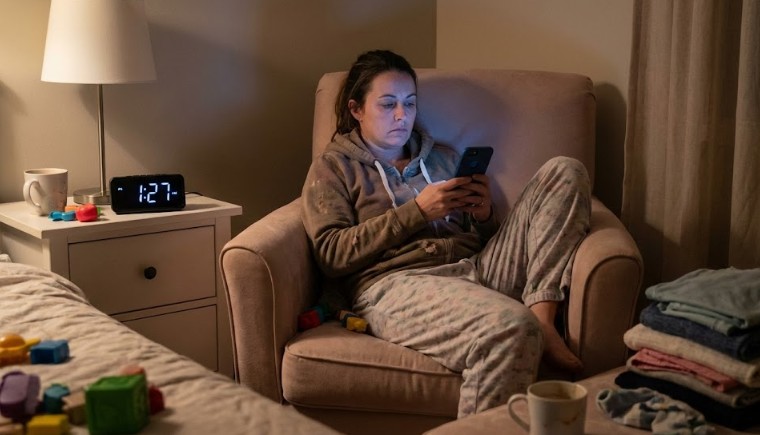
It’s 11 PM, and you’re exhausted, but instead of sleeping, you’re scrolling through social media for the third hour. The kids are finally in bed, work emails are answered, dishes are done, and this is your first moment of actual freedom all day. You know you’ll regret staying up this late when the alarm goes off at 6 AM. But right now, surrendering these quiet hours feels impossible because they’re the only time that belongs to you.
This pattern has a name: revenge bedtime procrastination. You’re taking “revenge” on your overscheduled, everyone-needs-something-from-you days by stealing back time at night—even though you’re sacrificing sleep to do it. Research shows 40% of adults now sleep less than the recommended amount, and for mothers juggling work, childcare, and household management, this number climbs even higher. Breaking this cycle requires more than just setting a bedtime alarm—it needs actual tools to shift your nervous system from wired to ready for rest.
What Revenge Bedtime Procrastination Really Means
The Term’s Chinese Origins
The phrase “revenge bedtime procrastination” comes from a Chinese expression (bàofùxìng áoyè) that translates roughly to “retaliatory staying up late.” It emerged on social media in China around 2018, reflecting frustration with the “996” work culture, where employees work 9 AM to 9 PM, six days a week. When your waking hours are consumed by work and obligations, staying up late becomes a way to reclaim control over your own time.
The term went viral during COVID-19 as work-from-home blurred boundaries and extended hours. Suddenly, everyone felt they had even less leisure time than before, creating perfect conditions for revenge bedtime procrastination to spread globally.
How It’s Different from Regular Procrastination
Normal bedtime procrastination happens when you lose track of time doing something enjoyable—watching one more episode, finishing an interesting book, deep conversation with friends. You’re making a trade-off you feel good about: this fun now is worth being tired tomorrow. Revenge bedtime procrastination feels different because what you’re doing often isn’t even that enjoyable.
You’re not scrolling because those social media posts are fascinating. You’re doing it because it’s YOUR time and you’re desperately holding onto it. The phone time or TV binge isn’t particularly satisfying, but it’s yours, and that matters when nothing else during your day was.
Why Mothers Fall Into This Pattern More
Mothers experience revenge bedtime procrastination at higher rates than fathers. Your day is spent meeting everyone else’s needs—feeding kids, managing schedules, answering work demands, and handling household tasks. Even when you sit down, you’re mentally tracking what needs doing next.
By the time everyone is asleep, you’re exhausted but also starved for time that’s actually yours. Those late-night hours feel like the only moments where nobody needs you, where you control what happens next. This makes them precious even though you’re sacrificing sleep to claim them.
The Real Cost of Staying Up Too Late
Physical Health Consequences
When you regularly short yourself on sleep, your body pays the price. Adults need 7-9 hours per night. Falling short regularly affects your immune system, making you sick more often. Your cardiovascular system suffers—blood pressure rises, and inflammation increases. Even your gut health deteriorates with chronic sleep deprivation.
Over time, insufficient sleep raises your risk for serious conditions, including heart disease, diabetes, and cognitive decline. The irony is that the “me time” you’re claiming by staying up late is actually damaging the body you need to get through your demanding days.
Mental and Emotional Impact
Sleep deprivation worsens anxiety and depression. When you’re exhausted, your emotional regulation suffers—you’re more irritable with your kids, quicker to snap at your partner, and less patient with yourself. Small stressors feel overwhelming because you don’t have the mental reserves to handle them.
The next day after staying up too late, you’re distracted and less productive. Tasks take longer because you can’t focus. You get less done, which creates more stress, which makes you want to stay up late again for relief—the cycle perpetuates itself.
The Productivity Paradox
Here’s the trap: you stay up late because you feel you didn’t have enough time for yourself during the day. But sleep deprivation makes you slower and less efficient the next day. You accomplish less, which means even more backlog of tasks, leaving you with even LESS free time.
You’re trying to create time by sacrificing sleep, but you’re actually losing time because exhaustion reduces your functioning. The math doesn’t work, but when you’re in the pattern, it’s hard to see this clearly.
Why Standard Sleep Advice Doesn’t Work

“Just Go to Bed Earlier” Misses the Point
Most sleep advice tells you to set a consistent bedtime and stick to it. For revenge bedtime procrastination, this completely misses what’s happening. You’re not staying up because you don’t know you should sleep. You’re staying up because sleep means surrendering the only time that feels like it’s yours.
Telling someone to just go to bed earlier is like telling someone who’s starving to eat less. The problem isn’t a lack of information—it’s that a real need isn’t being met. Until you address the deeper need (reclaiming time, feeling some control over your life), behavioral tricks won’t stick.
Bedroom Environment Changes Aren’t Enough
Sleep hygiene advice focuses on external factors: a dark room, cool temperature, a comfortable mattress, and no screens. These things help with sleep quality once you’re trying to sleep. But they don’t address why you’re resisting sleep in the first place.
You could have the perfect sleep environment, and you’d still be in that beautifully optimized bedroom scrolling through your phone. The resistance isn’t about the room—it’s about not wanting to surrender consciousness because that means giving up your autonomy again.
The Nervous System Component
What most advice misses is that you can’t just decide to relax and have it happen. After a day of stress and constant demands, your nervous system is activated—in fight-or-flight mode. You’re wired, not tired, even though your body is exhausted.
Going to bed when you’re in this activated state means lying there with your mind racing. So you stay up “winding down” with screens, which actually keeps you activated because of blue light and stimulating content. You need actual nervous system regulation tools, not just permission to rest.
Understanding Your Nervous System at Night
Why You’re Wired When You Should Be Tired
Your autonomic nervous system has two modes: sympathetic (activated, alert, “on”) and parasympathetic (rest, digest, repair). A full day of demands—work stress, kid needs, household tasks, mental load—keeps you in sympathetic activation for hours. Your body gets used to operating in high-alert mode.
When evening finally arrives and demands decrease, your nervous system doesn’t automatically switch off. It’s still primed for threats and tasks. This is why you feel “tired but wired”—your body is exhausted, but your system is still running on stress hormones like cortisol and adrenaline.
The Phone Time Trap
You reach for your phone or TV because you need something to do with all this activated energy. But screens keep you in sympathetic mode. Blue light suppresses melatonin (the sleep hormone). Stimulating content—whether news, social media drama, or exciting shows—maintains activation rather than allowing downregulation.
You think you’re winding down, but neurologically you’re maintaining arousal. This is why hours of phone time don’t actually help you feel ready for sleep. You’re filling activated time with more activation.
What Downregulation Actually Requires
Shifting from sympathetic to parasympathetic mode requires specific interventions. Your nervous system needs signals that it’s safe to stand down. This happens through things like: slow breathing that activates the vagus nerve, gentle movement that releases held tension, touch and warmth that signal safety, darkness, and quiet that tell your brain night has arrived.
These aren’t optional nice-to-haves. There are neurological requirements for transition. Without them, you can’t actually wind down, no matter how tired you are.
Creating Real Evening Rituals That Work
The Two-Hour Wind-Down Window
Instead of pushing through until bedtime and then trying to sleep instantly, create a two-hour transition window. This gives your nervous system actual time to downregulate. The first hour is for completing necessary tasks and beginning to slow down. The second hour is for deliberate calming practices.
This might feel impossible when you’re already time-starved. But remember: proper sleep makes you more efficient tomorrow, actually creating more usable time. The two hours you invest in good sleep return as better energy and focus the next day.
Replacing Scroll Time with Actual Nourishment
What if your evening time felt genuinely restorative instead of just being “not work”? Instead of passive scrolling, choose activities that actually feed you. Reading a physical book (no backlit screens). Taking a bath with calming scents. Gentle stretching or yin yoga. Journaling or self-reflection.
These activities give you the “me time” feeling you crave while also preparing your body for sleep rather than preventing it. They provide autonomy and choice (this is MY time) without the activation cost of screens.
Body-Based Practices for Transition
Your body holds the day’s stress in muscles and fascia. Gentle movement helps release this. Try: lying on the floor with legs up the wall for 10 minutes, slow neck and shoulder rolls, progressive muscle relaxation (tense and release each body part), cat-cow stretches in bed.
These practices signal your nervous system that the day is over and it’s safe to let go. They don’t require much time or energy, which is perfect when you’re already exhausted. Five minutes of actual body-based downregulation does more for sleep than an hour of phone scrolling.
Breathwork for Nervous System Shift
Conscious breathing directly activates your parasympathetic nervous system. Try box breathing: inhale for 4 counts, hold for 4, exhale for 4, hold for 4. Or extended exhale breathing: inhale for 4, exhale for 6-8. The longer exhale specifically signals safety to your nervous system.
Do this for just 3-5 minutes. You’ll notice your heart rate slow, your muscles soften, and your mind quiet. This is actual downregulation happening, not just thinking about relaxing.
How Plant Medicine Supports Better Sleep Patterns
Psilocybin’s Effect on Sleep Architecture
Research shows psilocybin affects sleep patterns in interesting ways. At lower doses, it can help regulate circadian rhythms that get disrupted by stress and irregular schedules. It works on serotonin receptors involved in sleep-wake cycles, helping your body remember its natural rhythm.
Many people find that regular microdosing helps them fall asleep more easily at night. The medicine seems to reduce the nighttime rumination and racing thoughts that keep you awake when you finally do get to bed.
Evening Micro-Ritual with Intention
Some find that taking a very small dose 2-3 hours before intended bedtime helps with evening transition. Not enough to be actively “on” but enough to gently support the nervous system’s shift toward rest. Combined with actual wind-down practices, this can make letting go of the day feel more natural.
The key is pairing it with intentional evening practices rather than using it to stay up doing the same patterns. The medicine can support your transition, but you still need to create the conditions for rest.
Addressing the Root: Daytime Stress Regulation
Perhaps more importantly, psilocybin helps with the daytime stress that creates the evening revenge cycle. Regular practice can help you feel more present during the day, making moments of joy more accessible even within busy schedules. When you actually get small doses of satisfaction during the day, the desperate evening grab for “me time” loses some urgency.
The medicine won’t fix the lack of actual free time or the unfair distribution of labor in your household. But it can help you find pockets of peace within your day that take some pressure off those late-night hours.
Reclaiming Time During the Day
The Root Cause Nobody Addresses
Revenge bedtime procrastination is a symptom of a deeper problem: you have no control over your time during waking hours. Everyone else’s needs dictate your schedule. Work demands, kid schedules, hand ousehold tasks consume every hour. Sleep is the only thing you CAN control by simply refusing to do it.
Until you create some actual discretionary time during the day, the nighttime pattern will persist because that’s the only time available. This requires examining where your time goes and making hard choices about boundaries and delegation.
Auditing Your Actual Time Use
Track your time for one week. Not what you think you do, but what you actually do. Where are the time leaks? Tasks you do that others could do? Time spent on others’ poor planning? Activities you do out of guilt rather than genuine want?
This audit often reveals that some of your “no free time” comes from saying yes to things you don’t actually want to do or taking responsibility for tasks that aren’t yours. Mothers are socialized to be accommodating and helpful, which creates time poverty.
Creating Non-Negotiable Pockets
Even 20 minutes of actual free time during the day can take pressure off evenings. This might be: a real lunch break where you’re not multitasking, walking outside without your phone, reading for 15 minutes in the afternoon, or any activity where you’re not in service to others.
These pockets need to be protected as fiercely as you’d protect a work meeting or doctor appointment. They’re not “extra” or “if there’s time”—they’re necessary maintenance for your nervous system and mental health.
The Delegation Conversation
If you’re drowning in household tasks while your partner has leisure time, that’s a relationship problem that no sleep hygiene can fix. Have the conversation about the fair distribution of labor. Not just tasks, but the mental load of remembering and managing them.
This is uncomfortable but necessary. Your sleep deprivation from revenge bedtime procrastination is often a symptom of an unequal partnership. Fixing it requires addressing the underlying unfairness, not just your personal sleep habits.
Building Your Personal Wind-Down Ritual
What Makes Rituals Actually Work
Rituals work because they’re consistent signals to your brain and nervous system. When you do the same sequence of calming actions each evening, your body learns this is the transition to sleep time. The ritual itself becomes a trigger for downregulation.
But the ritual has to actually feel good to you. If it’s just another obligation or “should,” it won’t work. Choose practices that genuinely feel nourishing, not what someone else says you should do.
Sample Evening Sequence
Here’s one example, customized to fit your life: 8:30 PM – Complete any urgent tasks, set out tomorrow’s necessities. 9:00 PM – Change into comfortable clothes, dim lights throughout the house. 9:15 PM – Gentle stretching or movement for 10 minutes. 9:30 PM – Bath or shower, intentional self-care. 10:00 PM – Reading or journaling in bed, no screens. 10:30 PM – Breathing practice, lights out.
This is just a framework. The specific content matters less than having a consistent sequence that moves you from “day mode” to “sleep mode” in stages.
Making It Sustainable
Start small. Don’t try to overhaul your entire evening immediately. Add one calming practice and make it consistent before adding another. Maybe just the breathing practice at first. Then add the gentle movement. Build slowly.
Also, let yourself be imperfect. Some nights won’t go according to plan, and that’s fine. The ritual is a pattern, not a rigid rule. Do what you can when you can, and let the consistency build over weeks.
Tools to Support Your Evening Transition

Plant-Based Evening Support
Our capsules can be part of your evening wind-down when taken a few hours before bed. Many find that microdosing helps them transition from the day’s demands into the evening more smoothly. The gentle nervous system support makes letting go of tasks and worries feel more natural.
For those who want their evening dose to feel like a treat, our chocolate offers the same support wrapped in a moment of indulgence. Taking your evening dose can itself become part of your wind-down ritual—a signal to your nervous system that it’s time to shift gears.
Options for Different Needs
If you prefer something simple and portable, our gummies fit easily into evening routines without any preparation needed. For those working more actively with plant medicine for sleep support, our higher-dose gummies offer stronger support when you need help breaking entrenched patterns.
The key is finding what works for YOUR life and YOUR nervous system. There’s no one-size-fits-all solution to revenge bedtime procrastination because the root causes vary. Experiment to find what actually helps you transition from day to rest.
Finding Your Sleep Support Community
Why Changing Patterns Alone Is Hard
When you’re the only one in your life working on this, it’s easy to slide back into old patterns. You get tired, stressed, and reach for the phone because that’s the automatic response you’ve built over the years. Having people who understand the specific struggle makes a difference.
The Sugar Mama community includes women working on exactly these issues. You’ll connect with others struggling with revenge bedtime procrastination, sharing what’s actually working and what isn’t. This accountability and support help new habits stick when your own willpower runs thin.
Shared Struggles, Shared Solutions
When someone else shares they stayed up until 2 AM scrolling despite being exhausted, and others respond with recognition rather than judgment, you realize you’re not broken. This is a common pattern that emerges from common pressures. Normalizing the struggle reduces shame, which makes change more possible.
You’ll also hear creative solutions you hadn’t thought of. One person’s evening ritual might spark ideas for your own. Someone’s boundary-setting language with their partner might give you the words you needed. Community knowledge exceeds individual figuring-it-out.
Addressing the Deeper Issues
It’s Not Really About Sleep
Revenge bedtime procrastination is actually about autonomy, control, and having space for yourself in a life that feels consumed by others’ needs. The solution isn’t better sleep hygiene—it’s creating a life where you have actual free time and agency during waking hours.
This might mean difficult conversations about household labor distribution. Setting boundaries at work. Saying no to commitments you don’t genuinely want. Letting go of perfect parenting standards. These are bigger changes than a bedtime routine, but they’re what actually address the root.
When to Get Additional Support
If you’ve tried creating evening rituals and daytime boundaries but still can’t stop the late-night scroll, consider whether something deeper needs attention. Depression and anxiety can drive revenge bedtime procrastination. Unprocessed trauma can make feeling “off duty” very difficult. ADHD can make time perception and transitions harder.
Professional support from a therapist, especially one who understands mothers’ specific pressures, can help you work through these underlying factors. There’s no shame in needing more support. The patterns that create revenge bedtime procrastination are often deeply rooted.
The Ongoing Practice
Even after you break the revenge bedtime procrastination cycle, stress will sometimes pull you back toward it. This isn’t failure—it’s being human. The goal isn’t perfection. It’s having tools to notice when you’re slipping back and gently redirect yourself toward healthier patterns.
Some weeks will be great with consistent evening rituals and good sleep. Other weeks will be messy with late nights and exhaustion. What matters is the overall trajectory and having practices to return to when things get off track.
Your Sleep-Supportive Life Awaits
The late-night scrolling gives you a few hours that feel like yours. But they come at the cost of your energy, health, and functioning the next day. That’s not actually freedom—it’s a painful compromise born from having too few better options.
Real freedom would be having actual time during the day. Going to bed at a reasonable hour because you’re not starved for autonomy. Waking rested because you gave your body the sleep it needed. Feeling energized rather than depleted. This is possible, but it requires addressing the whole picture.
Start with small changes. Pick one evening practice and make it consistent. Identify one area where you can reclaim 15 minutes during the day. Have one conversation about fairer task distribution. These small shifts accumulate over time into real pattern change.
Frequently Asked Questions About Revenge Bedtime Procrastination
Why do I stay up late even when I’m exhausted?
You’re likely experiencing revenge bedtime procrastination—staying up to reclaim time that felt controlled by others during the day. When your waking hours are consumed by work, childcare, and obligations, late-night hours feel like the only time that’s truly yours. Your brain prioritizes this autonomy over sleep, even though you’re tired. The pattern persists because it addresses a real need (personal time) even while creating a real problem (sleep deprivation).
Is revenge bedtime procrastination the same as insomnia?
No. Insomnia is difficulty sleeping when you try. Revenge bedtime procrastination is deliberately delaying sleep even though you’re capable of sleeping. You’re choosing to stay up—not struggling to fall asleep. However, the two can interact. Chronic revenge bedtime procrastination can disrupt your sleep patterns enough that you eventually develop actual insomnia. Also, the activated nervous system from staying up late can make it harder to fall asleep when you finally try.
How can plant medicine help with bedtime procrastination?
Psilocybin microdosing supports better sleep patterns in several ways. It helps regulate circadian rhythms disrupted by stress and irregular schedules. It reduces nighttime rumination that keeps you awake. During the day, it can help you feel more present and find moments of satisfaction within busy schedules, reducing the desperate need to steal time at night. For evening support, very small doses a few hours before bed can help with nervous system transition from “on” to “rest” mode.
What if I’ve tried evening routines and they don’t work?
If standard bedtime routines haven’t helped, you’re likely missing one of three things. First, actual nervous system regulation—you can’t just decide to relax, you need specific practices like breathwork and gentle movement that shift your biology. Second, daytime free time—until you have some actual autonomy during waking hours, you’ll resist giving up nighttime. Third, fair labor distribution—if your evenings are consumed by tasks while your partner relaxes, no sleep hygiene will fix this relationship problem. Address these root causes rather than just trying to force yourself to bed earlier.
Begin Your Evening Transformation Tonight
Ready to replace doom-scrolling with actual rest? Our microdosing capsules support nervous system regulation as you build new evening habits. Want your wind-down to feel indulgent? Our chocolate makes your evening dose something to look forward to. Need portable support? Our gummies work with your busy life. For stronger sleep support, try our higher dose options as you break old patterns. Join the Sugar Mama program to connect with women creating sustainable evening rituals together. Share your struggles with revenge bedtime procrastination, learn what’s working for others, and build accountability for better sleep habits. Your journey from exhausted and wired to rested and restored starts with one choice tonight.