
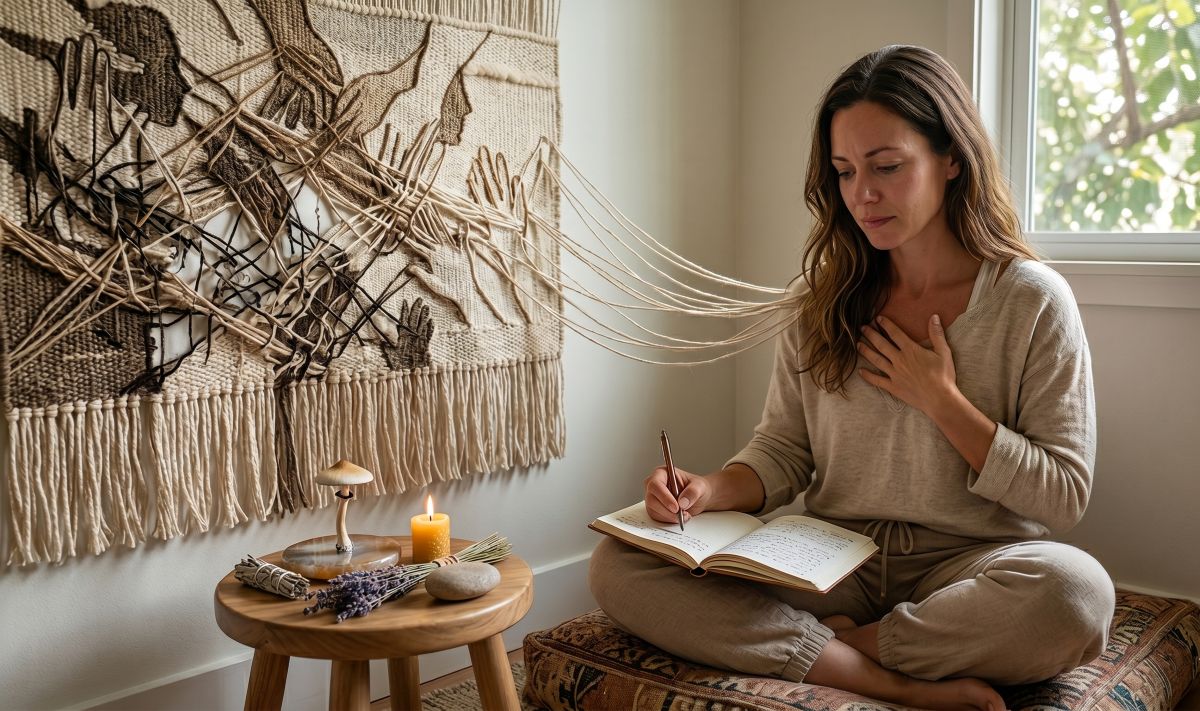
Healing the ‘Mother Wound’ with Plant Medicine
Some pain stays loud for years, even when the room is quiet. You may be grown, working, dating, parenting, or trying to build a softer home than the one you had, yet one look, one tone, one visit, or one small remark from your mother can still pull you right back into the old ache.
That is why so many women look up mother wound healing and generational trauma therapy. They are trying to name a hurt that is hard to hold in plain language, a hurt tied to love, need, guilt, anger, loyalty, grief, and the strange fact that the first woman who taught you how to be in the world may also be the one who made that world feel unsafe, thin, or hard to trust.
What people mean when they say “mother wound”
“Mother wound” is a popular phrase, not a formal diagnosis. Healthline says that directly, and the clearest mainstream pages describe it as emotional pain that grows from a strained, neglectful, cold, intrusive, or otherwise misattuned bond with a mother or primary caregiver, usually with daughters in focus, even though sons can feel it too.
That matters because the phrase is useful, but it should not replace a real mental-health look at trauma, depression, anxiety, PTSD, or attachment trouble. A woman can use the phrase to name her story, yet still needs care that looks past the label and asks what is actually happening in her body, her relationships, her sleep, her self-talk, and her daily pull toward fear, shutdown, approval-seeking, or overgiving.
Why does this pain often feel bigger than one relationship
The mother wound rarely lives in one memory alone. Verywell Mind frames it as a break in the early caregiver bond, and Healthline ties it to attachment, low self-worth, trouble self-soothing, and harder adult relationships, which is why this pain can show up years later in dating, friendship, work, parenting, and the private voice in your own head.
This is also why women often say, “It was not even one huge event.” Sometimes the wound came from criticism, emotional absence, blurred boundaries, parentification, mood swings, shame around feelings, or a mother who met material needs but could not offer warmth, calm, or steady care when it counted most.
How it gets passed down
When people search for generational trauma therapy, they are usually trying to make sense of patterns that did not start with them. The stronger reviews on intergenerational trauma do back the idea that trauma can echo into later generations through stress biology, family silence, rigid roles, mistrust, emotional restraint, and parental PTSD, though the evidence base is still uneven and not every family follows the same path.
That does not mean your mother harmed you on purpose, and it does not mean her own pain erases yours. It means two things can be true at once: she may have been carrying grief, fear, scarcity, patriarchy, abuse, addiction, or neglect from her own line, and you still have the right to name what those patterns did to you without turning the whole story into either blame alone or forgiveness on command.
What mother wound healing can look like in adult life
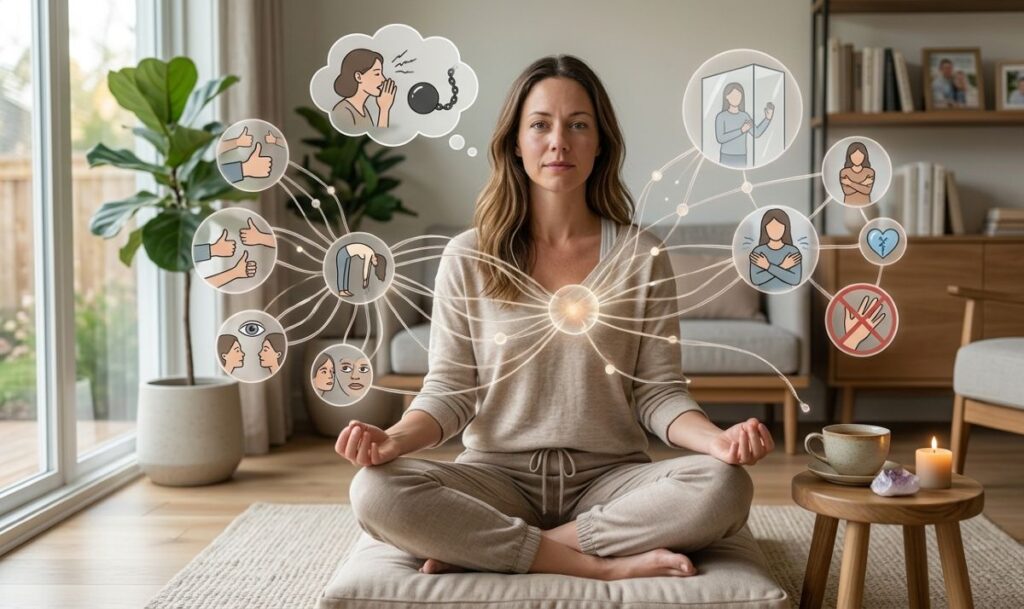
Mother wound healing often starts with noticing adult patterns that feel oddly old. You may hear your mother’s voice in your self-criticism, overread people’s moods, chase approval, feel guilty resting, pick cold partners, fear being “too much,” struggle with boundaries, or work very hard to look easy while feeling worn thin inside.
The pattern can also tilt the other way. Some women become hyper-independent, hard to reach, numb in conflict, or quietly cut off from need because need once felt unsafe, embarrassing, or useless; that still traces back to the same wound, because both clinging and distance can grow from the same early message that love is unstable, costly, or hard to trust.
Why the body keeps score even when the mind “gets it”
A lot of women already know the story. They know their mother was cold, or absent, or overwhelmed, or sharp-tongued, or needy, or emotionally young, and still that knowledge does not settle the body.
That makes sense through attachment and trauma research, because early caregiving shapes safety responses, stress responses, and adult relationship patterns. Reviews on adult attachment and childhood maltreatment show that neglect and abuse track with anxious or avoidant attachment later on, and attachment theory work ties early closeness and safety to how adults handle stress, trust, and intimacy years later.
This is one reason the mother wound can feel like a body problem as much as a memory problem. You may know you are safe in the present, yet your stomach drops with criticism, your jaw locks with disappointment, your chest tightens when you need something, or your whole nervous system braces when a woman you love goes cold on you for a day.
What “generational trauma therapy” usually means in real life
There is no one official treatment called generational trauma therapy. In practice, people usually mean trauma-informed care that looks at family patterns, attachment wounds, the body’s alarm system, old beliefs about love and safety, and the ways those threads show up in present-day relationships.
When trauma symptoms are strong, the most established routes still sit in trauma-focused psychotherapy. The VA/DoD PTSD guidance names Prolonged Exposure, Cognitive Processing Therapy, and EMDR as the best-supported treatments for PTSD, and CPT in particular works with beliefs about safety, trust, control, esteem, and intimacy while also using writing and homework between sessions.
That matters here because the mother wound often carries shame, grief, anger, and old attachment pain, but those feelings may overlap with actual trauma symptoms. If your daily life is marked by flashbacks, panic, numbness, nightmares, strong avoidance, or a very hard time functioning, the first move is not a prettier ritual; it is a licensed therapist who knows trauma work.
Journaling has a real place in mother wound healing
Journaling is not a magic fix, but it has a real place. Healthline already names journaling as part of mother-wound work, and the expressive-writing literature shows that writing about trauma can reduce symptoms more than waiting-list control, even if it does not replace full psychotherapy and even if its effects are usually smaller than full trauma therapy.
The bigger reason journaling helps is simpler than that. It gives shape to pain that often stays foggy, lets you separate your mother’s voice from your own voice, and turns vague guilt into words you can actually look at instead of carrying all day in your ribs, your throat, and your scrolling habits.
A good mother-wound journal is not a polished diary. It is a plain place to write what I needed, what I learned to hide, what I still chase, what still hurts, what I repeat, what I will no longer hand down, and what a kinder inner mother would say to me tonight.
That is why self-reflection prompts fit this topic so well. They turn a big ache into smaller questions, and those smaller questions are often what make healing feel possible on an ordinary weekday rather than only in one heavy therapy session or one emotional holiday.
Self-compassion is not fluff here
One thread keeps showing up in trauma research: people with childhood maltreatment histories tend to have lower self-compassion, and higher self-compassion tracks with lower PTSD symptom load. That does not mean self-kindness fixes trauma by itself, yet it does tell us why the harsh inner mother voice can keep the wound open long after the outer relationship has cooled, gone distant, or even ended.
This is why mother wound healing often includes self-reparenting, which is a plain way of saying you start giving yourself what was thin or missing before. It may sound soft, but in practice it looks sharp and real: saying no sooner, feeding yourself before the crash, resting before resentment, speaking to yourself without contempt, and refusing to hand your nervous system over to every old family script.
Healing does not require forced forgiveness
This point matters for search intent because many women quietly fear that healing means they must make peace with their mother in a way that does not feel true. The stronger mainstream pieces do not say that; they say healing may include forgiveness for some people, but it can also mean boundaries, grief, less contact, or working through the pain with a therapist when repair is not safe or not possible.
That is worth hearing twice. You do not have to call harm love, you do not have to turn access into duty, and you do not have to stand close to someone who still cuts you open just because she is your mother; a calmer life is allowed to include distance.
Where plant medicine enters the picture
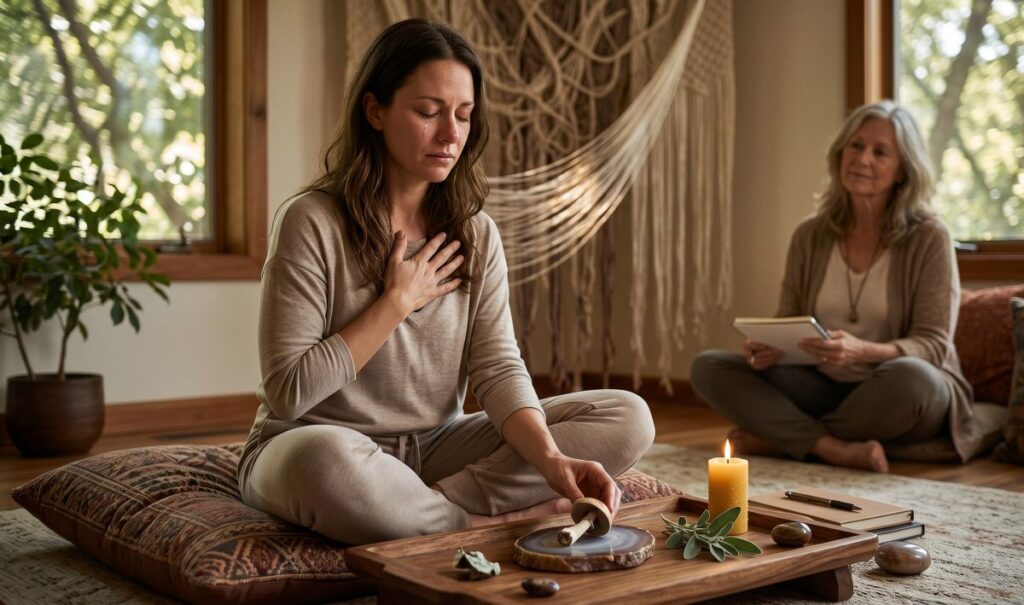
This is where the conversation gets tender. A lot of women are not looking for one more list of coping skills; they want to feel more honest, more open, less defended, and less trapped inside the same old family story.
That is one reason plant medicine enters the mother-wound talk at all. In controlled research settings, psilocybin has drawn interest across several mental-health areas, and one observational study in adults with adverse childhood experiences found lower psychological distress among recent psilocybin users than nonusers, though that design cannot show cause and effect and does not prove that psilocybin heals childhood trauma.
At the same time, the clean version of the science is still much more modest than the online glow around it. NIDA says psilocybin is not approved by the FDA for any condition, and the agency stresses that medical research uses preparation, a controlled setting, supervision during the session, and follow-up afterward, which is very different from self-directed use.
That difference matters more for trauma than for almost any other topic. Trauma can make people chase relief fast, and plant medicine can stir grief, fear, memory, or body material in ways that feel raw if the person is alone, unprepared, poorly screened, or using the experience as a shortcut instead of part of real care.
What current trauma-and-psilocybin research can honestly say
The honest answer is that the field is still early. Reviews on psilocybin and trauma say the treatment logic is interesting, and the fit with psychotherapy may be promising, but they also make clear that the evidence is still limited and that PTSD-specific work is still investigational rather than settled care.
So if you are writing or reading about healing the mother wound with plant medicine, the best language is careful language. Plant medicine may help some adults feel less defensive, more present with grief, or more able to sit with old material, yet it should not be sold as a proven fix for generational trauma, nor as a stand-in for trauma therapy, nor as a DIY answer for severe symptoms.
A careful place for microdosing
Microdosing is where many readers will lean in, and it deserves the same honesty. Stories from users can sound hopeful, but placebo-controlled psilocybin microdosing studies still have not shown steady, reliable cognitive or emotional gains beyond placebo, and a 2026 double-blind paper found no clear behavioral or subjective gains compared with placebo across its measured outcomes.
That does not mean no one feels calmer or more open on a personal level. It means microdosing fits better in this article as a gentle ritual some adults are curious about, not as proven trauma treatment, not as proof that your mother wound is now “worked through,” and not as a reason to skip therapy, sleep, journaling, body care, or safer relational work.
A home ritual that is kinder than flooding
For many women, mother-wound work goes better when it is steady and small. That can mean ten minutes of writing before texts, one unsent letter a week, a walk after a hard call with your mom, a hand on your chest before bed, or a ritual corner that tells your body this house is not the same house you came from.
If plant medicine is part of that wider ritual, pairing it with set and setting, intention setting, and integration keeps the article aligned with what careful use actually asks for. It also keeps the focus where it belongs: not on escaping pain fast, but on how you meet pain before, during, and after any ritual you choose.
A softer product section that still fits the topic
If a reader is already in the My Sugar Magnolia world and wants a measured format that fits a calm ritual, the easiest route is to pick the format that matches the mood of her day. Capsules suit women who want a neat, simple routine, a chocolate bar works for a slower, more sensory pause, gummies feel light and familiar, and 500mg gummies are the stronger-format page for readers who already know they want that lane.
The safer way to place those products in a mother-wound article is to keep them inside ritual, not inside big promises. A format can help make a practice feel more regular and more intentional, but the real work still sits in writing, grief, boundaries, therapy, body care, and the slow work of giving yourself a steadier inner mother than the one you had.
FAQ
Is “mother wound” a real diagnosis?
No. Healthline says it is not a specific diagnosis, even though the pain can feel very real; it is better read as a popular phrase for attachment pain, early unmet needs, and family patterns that still show up in adult life.
Can you heal your mother’s wound if your mother never changes?
Yes. Verywell Mind and Healthline both say healing can happen even when repair with the mother is limited or impossible, and sometimes the cleanest path is therapy, boundaries, grief work, and less contact rather than waiting for an apology that may never come.
What therapy helps with generational trauma?
There is no one official method called generational trauma therapy. In practice, trauma-informed therapy may include attachment work, family-pattern work, and, when PTSD symptoms are present, trauma-focused care like CPT, PE, or EMDR.
Can journaling really help?
Yes, as part of a wider plan. Healthline names journaling in mother-wound healing, and the expressive-writing research shows it can reduce trauma symptoms more than no treatment, though it is not a substitute for full trauma therapy when symptoms are heavy.
Can plant medicine erase generational trauma?
No. That is too big a promise for the current evidence, and it is not how trauma tends to work; at best, plant medicine may give some adults a new angle on old material, but the field is still early, and it does not erase the need for safety, screening, therapy, integration, and plain daily repair.
Is microdosing proven for trauma or mother-wound work?
No. Placebo-controlled microdosing studies have been mixed to null, with the newest double-blind work not showing reliable gains beyond placebo across the main outcomes measured.
What if contact with my mother feels unsafe?
Distance is allowed. Healing does not require fresh exposure to someone who still harms you, and both mainstream mother-wound pieces leave room for boundaries, therapist-led processing, and not extending the olive branch when it would cost too much.
When should I get help right away?
Get help right away if this topic brings up self-harm thoughts, suicide thoughts, panic that feels unmanageable, or trauma symptoms that make daily life feel hard to carry. In the U.S., call or text 988 for free, confidential crisis help at any hour.
What gets handed down can stop here
Healing the mother wound is rarely one talk, one ceremony, one journal entry, or one perfect insight. It is the steady act of naming what hurt, grieving what you did not get, learning how it still shows up, and then building a new home inside yourself where care is not earned by shrinking, pleasing, fixing, or going numb.
If you want to keep that work close to a daily ritual, start with a format that feels measured and easy to return to: capsules, chocolate bar, gummies, or 500mg gummies. Then pair that with self-reflection prompts, daily rituals, and microdosing and meditation so the practice stays grounded in real life. And if the wider My Sugar Magnolia circle feels like a fit, Sugar Mama is the page where the brand invites women into its ambassador lane, with wholesale pricing and tools for sharing the brand in a more personal way. On a topic like this, that softer closing makes sense: not a loud promise, just one more place to stay close to the ritual, the writing, and the kind of woman you are trying to mother into being now.