

The Loneliness Epidemic: Finding Connection in a Disconnected World
There is a kind of loneliness that does not look dramatic from the outside. You answer messages, go to work, run errands, and maybe even spend time with people, yet some part of you still feels unseen, underheld, or oddly far away from the rest of the world, which is why so many people search phrases like curing loneliness even when what they really mean is, “How do I stop feeling cut off from life?” That ache is real, and it does not only happen to people who live alone or have no social life. It can happen in a busy marriage, in a full office, in a group chat that never says anything real, or in a city full of people where nobody knows how your day actually went.
The harder part is that adulthood gives loneliness better hiding places. It can look like being too tired to reach out, too proud to say you need people, too online to notice you are starving for in-person warmth, or too overbooked to build the kind of life where connection has room to grow. That is why this topic matters so much now. The U.S. Surgeon General has described loneliness and isolation as a public-health issue, and CDC pages now frame social connection as something that protects both mental and physical health, not just a nice extra if you happen to have the time.
Loneliness is not the same as being alone
One of the most helpful starting points is to separate loneliness from solitude. Solitude can feel restful, chosen, quiet, and even healing, while loneliness feels like a gap between the connection you have and the connection you need, which is why you can feel lonely in a crowd and perfectly fine on a long walk by yourself. Pages on loneliness and isolation, and how to deal with loneliness, both make this point clearly, and it matters because it takes shame out of the picture. You are not weak for feeling lonely, and you are not failing at life just because your social world does not feel as nourishing as you want it to.
This also explains why “just go be around people” often does not work. If the relationships are thin, performative, one-sided, or all logistics and no closeness, your body may still come home feeling empty. Quality matters more than headcount. A smaller circle of real, mutual relationships can do much more for your nervous system than a packed calendar full of shallow contact, which is why building community as an adult is less about collecting people and more about slowly creating places where you can be known.
Why adulthood makes connection harder than people admit
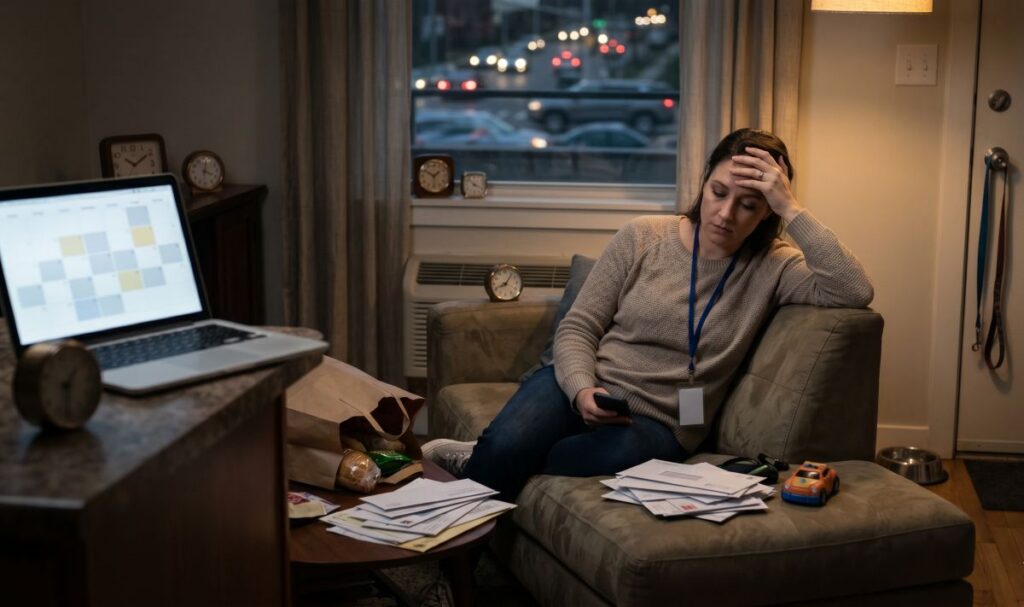
A lot of adults quietly assume that if friendship feels hard now, something must be wrong with them. Usually, the problem is not character. It is structured. In school, college, and early work life, you are put beside the same people again and again, which gives friendship many chances to start. Later on, life gets chopped into work, caregiving, commuting, errands, and recovery time, which means even people who want more closeness may not have enough repeated, easy contact to let it grow. HelpGuide points out that we often become friends with people we cross paths with regularly, and Psych Central notes that time pressure and fear of rejection are two of the biggest reasons adult friendship gets stuck.
There is also a second problem that feels more private. Many adults do not just lack time. They lack practice. They do not know how to move from acquaintance to friend anymore, how to ask for more time with someone without sounding needy, how to host something simple, or how to admit they want community at all. That makes loneliness self-protecting. The longer it lasts, the more it can convince you to stay home, say “I’m just tired,” and let another week go by with no real contact. Healthline and HelpGuide both describe that loop, where isolation makes it harder to reach out and harder to believe reaching out will help.
Why the loneliness epidemic is a real health issue
This topic is not only emotional. It is physical, too. CDC says stronger social bonds are linked with longer, healthier lives and lower risk of heart disease, stroke, dementia, depression, and anxiety. The same CDC material also describes social connection as part of the conditions that help communities thrive, because the benefits do not stop at the individual level. Connection affects stress, sleep, movement, resilience, and the willingness to give and receive help.
That wider health angle is one reason the phrase loneliness epidemic has stuck. This is not just about feeling left out on a Saturday night. It is about the way a disconnected life can quietly thin out your days, your habits, your hope, and your sense that other people are available to you in any real way. When social connection gets treated like a luxury instead of a human need, the body often pays the bill.
What actually helps when you feel cut off
The first useful truth is that loneliness usually does not lift because you suddenly become more confident. It starts to lift when you make it easier for the connection to happen. That means you do not wait until you feel perfectly social, perfectly attractive, or perfectly healed. You create small contact points that lower the bar enough for life to come back in. The practical pages do not promise a dramatic fix here. They keep coming back to things like volunteering, joining groups tied to real interests, taking classes, and putting themselves in places where the same people show up often enough for familiarity to form.
The second truth is that loneliness responds better to pattern than to intensity. One dinner every six months will not do what a weekly walk can do. One huge heart-to-heart with a stranger will not do what a month of small check-ins can do. When people search curing loneliness, what tends to help is not one giant solution but repeated contact, shared purpose, and a little more courage than the week before. That is slower than most people want. It is also how a community usually forms in real life.
Building community as an adult starts with repeated places
If you want to build community as an adult, start with repeatable spaces. This matters because friendship grows faster in places where you do not have to invent a whole new social life from scratch every single time. HelpGuide’s advice around meeting new people is very plain on this point: classes, clubs, volunteer work, neighborhood events, and other recurring spaces create the kind of overlap where relationships can deepen without forced intensity. That repeated contact is not glamorous, but it works because people feel safer with familiarity.
This is also where a lot of adults aim too high, too fast. They think community means instantly finding “their people.” It usually starts much smaller than that. It may begin with the woman you see every week at yoga, the person at the local market who always remembers your name, the neighbor you keep waving to, the volunteer shift you almost skipped, or the book club that felt awkward the first two times and normal by the fourth. Real community often arrives disguised as repetition. That is why Community & Connection fit this topic so well on your own site. Both pieces keep pointing back to support, shared learning, and showing up with others instead of trying to figure everything out alone.
Turning acquaintances into actual friendships
A lot of lonely adults are not starting from zero. They are starting from almost. They know people, but they do not feel known by them. That “almost” can be frustrating because it looks like a connection from the outside while still feeling thin inside.
This is where community work becomes more active. HelpGuide’s friendship material suggests moving from shared space into shared life by making invitations, naming common interests, and opening up just one layer deeper than usual. That may mean asking a coworker to take a walk instead of chatting only in meetings, inviting a mom from school drop-off to coffee, or telling a casual friend something a little more real than surface-level updates and seeing what comes back.
The goal is not instant closeness. It is enough warmth and repetition for trust to have something to build on. Many adult friendships fail to deepen because both people are waiting for the other one to make the move. Psych Central makes this point differently when it talks about fear of rejection and the false belief that everyone else already has enough friends. Often they do not. Often, they are hoping someone else will go first.
Connection gets stronger when there is purpose, not just proximity
One reason loneliness can survive busy modern life is that many people are around others all day without doing anything meaningful with them. Shared purpose changes that. When people volunteer together, organize something together, learn something together, or care about the same place together, the connection has a reason to deepen.
This is why some of the best advice for lonely adults is also the least flashy. Join the thing. Help with the event. Take the class. Show up early and stay a little late. Offer a ride. Ask someone if they want to do the same thing again next week. Community often forms around usefulness before it forms around intimacy, and that is not fake. It is how trust grows. CDC also points to neighborhoods, schools, parks, workplaces, places of worship, and community spaces as key places where supportive connections can grow and reduce isolation.
For women especially, connection can deepen fast around ritual and gathering. That is part of why women’s circles, reading groups, walking groups, tea nights, and low-pressure check-ins matter. They give the nervous system an easier way into belonging. They also make it more likely that loneliness gets answered by something warmer than another hour on your phone.
Your phone can help, but it cannot do the whole job
Technology is not the villain in every loneliness story. For some people, digital contact is a bridge, a lifeline, or the only realistic way to stay close across distance, disability, caregiving schedules, or rural life. HelpGuide is clear that technology can help overcome isolation when in-person contact is hard, and Healthline also points people toward support tools, communities, and resources that start online.
Still, there is a difference between contact and nourishment. Scrolling through people is not the same as being with people. A feed can keep you informed while leaving you untouched. That is why a good rule is to let your phone support your real relationships instead of replacing them. Use it to make plans, send a voice note, answer a text, join a group, ask a question, and find an event. Then, when you can, move some of that connection into voice, video, walking, coffee, or shared time in a room. Even the strongest tech-friendly advice keeps circling back to the value of face-to-face interaction when it is available.
What loneliness often needs is a ritual, not just a resolution
A lot of people make lonely promises they cannot keep. “I’m going to get out more.” “I should make more friends.” “I need to stop isolating.” Those thoughts are not wrong. They are just too vague to change a day.
A ritual works better because it tells you what happens next. It may be one hour each Sunday where you text two people. It may be tea on Wednesday with one neighbor. It may be a Friday walk, a monthly supper club, or ten minutes of journaling before you decide whether what you need is rest or contact. This is where Curating Your Microdose Ritual can support this theme on your site. They shift the question from “How do I become a different person?” to “What gentle pattern can I actually keep?”
That kind of ritual matters because loneliness can blur your own signals. Some nights you need people. Some nights you need silence. Some days, you need courage to reach out. Some days, you need to stop pretending online contact is enough. A written ritual, even a very small one, helps you notice the difference.
Where microdosing may fit, and where claims need honesty
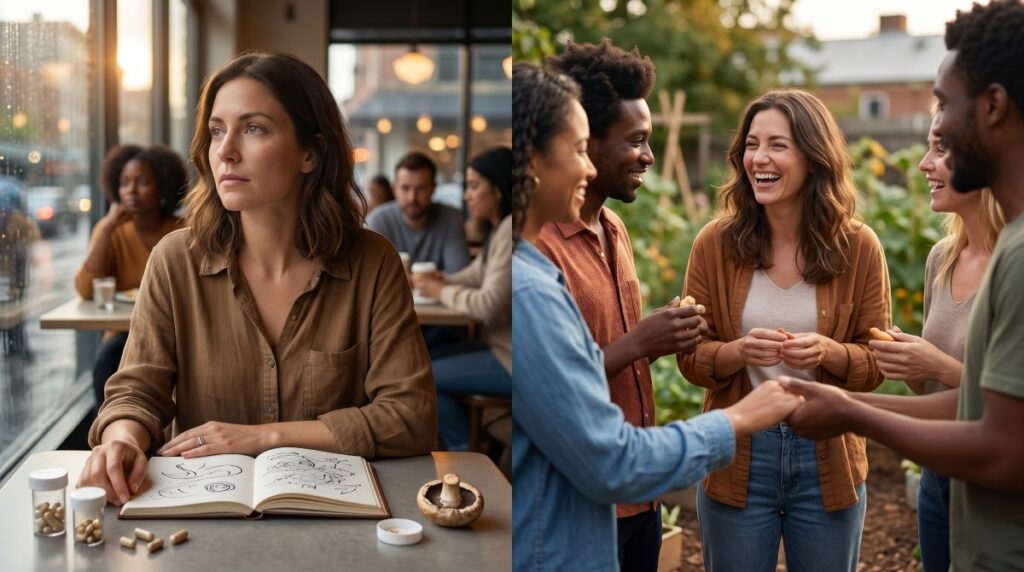
This is the part that needs the cleanest language. A lot of people are curious whether microdosing can help with loneliness, disconnection, or the feeling of being emotionally far away from others. The curiosity is understandable. Some broader psychedelic research has linked psychedelic experiences with higher reported social connectedness, and connectedness scales have become a real part of that research world. But that is not the same thing as saying microdosing has been proven to cure loneliness, or that self-directed use at home reliably creates deeper relationships.
That distinction matters even more because the stronger placebo-controlled microdosing studies still do not show reliable emotional or cognitive gains beyond placebo across their main outcomes. The 2022 double-blind psilocybin microdosing paper and the 2026 longitudinal double-blind trials both push back on the most confident wellness claims. So the honest way to place microdosing in a loneliness article is this: some adults are curious about it as part of a wider ritual of reflection and openness, but the strongest answer to loneliness is still social connection itself, not a promise that a dose will build community for you.
That said, if someone is already drawn to a mindful plant-medicine practice, the healthier frame is community-first, not substance-first. Learn with others. Keep expectations modest. Pair any use with journaling, reflection, and real human contact. And do not let the idea of a subtle internal shift replace the much harder and more important work of texting first, showing up again, and letting yourself be seen by people who can actually answer back.
A softer way to bring ritual and connection together
If you want the plant-medicine side of this conversation to feel grounded instead of abstract, it helps to choose a format that fits real life. Capsules work well for women who want a neat, measured morning format. The site describes them as 200 mg each, with 20 capsules per bag and a 3-day-on, 2-day-off rhythm, which fits readers who want structure and ease.
If you want something slower and more sensory, the chocolate bar leans into ritual more naturally. The product page lists 20 pieces at 200 mg per piece and suggests starting with half to one square, which makes it feel less clinical and more like a mindful pause. If you prefer something lighter and easy to keep on hand, gummies sit in that lane, with the site suggesting half to one gummy, or about 100 to 200 mg. And for readers who already know they want a stronger format, 500mg gummies are clearly positioned as a higher-dose option than the brand’s usual 200 mg gummies.
The key is to keep the sales moment honest. A format can support a ritual. It cannot do the whole relational work for you. The better move is to pair a measured product choice with Capsules, Gummies or Tea, a beginner’s guide, and the more community-centered articles already on your site, so the reader leaves with both a product path and a human path.
When loneliness starts asking for real support
Not every lonely season is a crisis. But there are times when loneliness sits so close to depression, panic, substance use, or hopelessness that it stops being something you should handle alone.
Healthline’s updated loneliness page directly points people toward support when loneliness becomes persistent or starts harming emotional and physical health, and CDC’s current community-and-connection page includes crisis language and 988 resources. That is worth saying plainly in a blog like this: if loneliness is turning into despair, self-harm thoughts, or a feeling that your life is shrinking to a dangerous point, reach for real support fast. Call or text 988 in the U.S. or get immediate help where you are.
FAQ
Is loneliness the same as social isolation?
Not exactly. You can be socially isolated and lonely, but you can also feel lonely while surrounded by people. Loneliness is more about the gap between the connection you have and the connection you need, while isolation is more about your actual lack of contact.
Why is building community as an adult so hard?
Because adult life gives you fewer built-in chances to see the same people again and again. Work, caregiving, moving, time pressure, and fear of rejection all make it harder for ordinary contact to turn into friendship.
What helps loneliness the fastest?
The fastest shift usually comes from real contact, not more thinking. A walk with someone, volunteering, joining a recurring group, making one small invitation, or reaching out to an acquaintance can help more than waiting until you feel less lonely before doing anything.
Is there really a loneliness epidemic?
Yes, that framing has been used at the public-health level in the U.S. The Surgeon General’s 2023 advisory described loneliness and isolation as a major health issue, and the CDC now treats social connection as part of health and well-being across the lifespan.
Can social media fix loneliness?
Sometimes it can help you stay in touch or find resources, but it usually does not replace the benefits of a more direct, meaningful connection. Most guidance treats digital tools as a bridge, not the whole answer.
Does microdosing cure loneliness?
There is no good evidence to say that. Some broader psychedelic research has linked psychedelic experiences with greater reported connectedness, but placebo-controlled microdosing studies have not shown reliable emotional or well-being benefits beyond placebo.
What is the best first step if I want more community?
Pick one repeated place. Not ten. One class, one volunteer shift, one club, one walking group, one coffee date that repeats. Community grows much more easily when you give people the chance to become familiar with you.
When should I get help for loneliness?
Get help when loneliness starts feeding depression, self-harm thoughts, heavy anxiety, drinking, shutdown, or the sense that daily life feels too hard to carry. In the U.S., 988 is the direct crisis line for urgent mental-health support.
Connection is usually built before it is felt
The hard truth about loneliness is that the feeling often changes after the action, not before it. You usually do not wait until you feel connected to start building a connected life. You show up, send the text, take the walk, join the room, try again, and let the feeling catch up later.
If you want to build that kind of life with a little more ritual around it, start with the format that suits your day: capsules, a chocolate bar, gummies, or 500mg gummies. Then keep the practice close to community and connection, mindfulness, and ritual. And if you want a deeper tie to the brand and the women around it, join Sugar Mama, where My Sugar Magnolia invites women into its ambassador circle with community, wholesale pricing, and tools to share the brand in a more personal way.