
Seasonal Affective Disorder (SAD): Bringing the Sun Inside
Winter has a way of shrinking a day before it shrinks a mood. The room gets dimmer earlier, the body slows down, the bed gets harder to leave, and even simple things can start to feel heavier than they did in late spring.
That dip is not always just a rough week. Sometimes it is the winter blues, sometimes it is seasonal affective disorder, and sometimes the best natural SAD treatment is a mix of light, timing, rhythm, food, movement, and a home routine that makes dark months feel less flat.
When winter low turns into more than a passing mood

Seasonal affective disorder is not just “I hate January.” It is a form of depression with a recurring seasonal pattern, and official guidance says symptoms often last about four to five months of the year rather than a few gloomy days after a holiday weekend.
That difference matters because a lot of people brush it off for too long. If low mood, extra sleep, carb cravings, social pullback, and loss of interest keep showing up in the same season year after year, it starts to look less like a slump and more like a real pattern that deserves care.
SAD is also not the same thing as holiday stress. The SAD basics make that distinction clear: winter-pattern SAD tracks daylight, not the calendar, and diagnosis usually depends on depressive episodes showing up in the same season for at least two years and being more frequent than at other times of year.
Why does less light can hit so hard
The simplest way to say it is this: your brain and body read light all day. When daylight drops, that shift can affect serotonin, melatonin, sleep timing, energy, and how steady or sluggish you feel.
The current official picture is not that one single switch breaks in winter. It is daylight changes can affect the systems that help regulate mood and daily rhythm, and people with SAD seem to have a harder time adjusting to that seasonal shift.
NIMH notes that winter-pattern SAD has been linked to lower serotonin activity, extra melatonin-related sleepiness, and daily rhythm disruption during darker months. Brain imaging work also points to seasonal shifts in the serotonin transporter, which helps explain why some people feel a clear winter slide while others do not. Serotonin shifts are part of the story, but so is timing, sleep, and the body clock as a whole.
The signs that many women brush off too fast
A lot of women do not call it SAD at first. They call it being tired, off, lazy, overworked, hormonal, done with people, or just “not myself right now.”
Winter-pattern SAD often shows up as oversleeping, overeating with a pull toward carbs, weight gain, social withdrawal, slower thinking, low drive, and a flat mood that hangs around most days. It can also bring the classic depression signs like sadness, irritability, low pleasure, and trouble focusing.
This pattern tends to show up more often in women than men, and it is more common farther north, where winter daylight is shorter. It is also more common in people with depression or bipolar disorder, which is one reason it is worth taking seriously instead of just waiting for March and hoping it passes.
Natural SAD treatment starts with timing, not perfection
Many seasonal depression hacks sound cute but fall apart in real life. The ones that hold up best are the ones tied to timing, because SAD is so linked to light and the body clock.
That means the first move is not “be more positive.” The first move is getting light into your day early, keeping wake time steady, and giving your brain a clear sign that morning has started, even when the sky looks like late afternoon at 8 a.m.
Mayo Clinic puts this plainly in its self-care guidance. Get outside early when you can, sit closer to bright windows, keep sleep and wake times regular, and keep moving even when winter tells you to hibernate under three blankets and a scrolling thumb.
Bringing the sun inside with light therapy
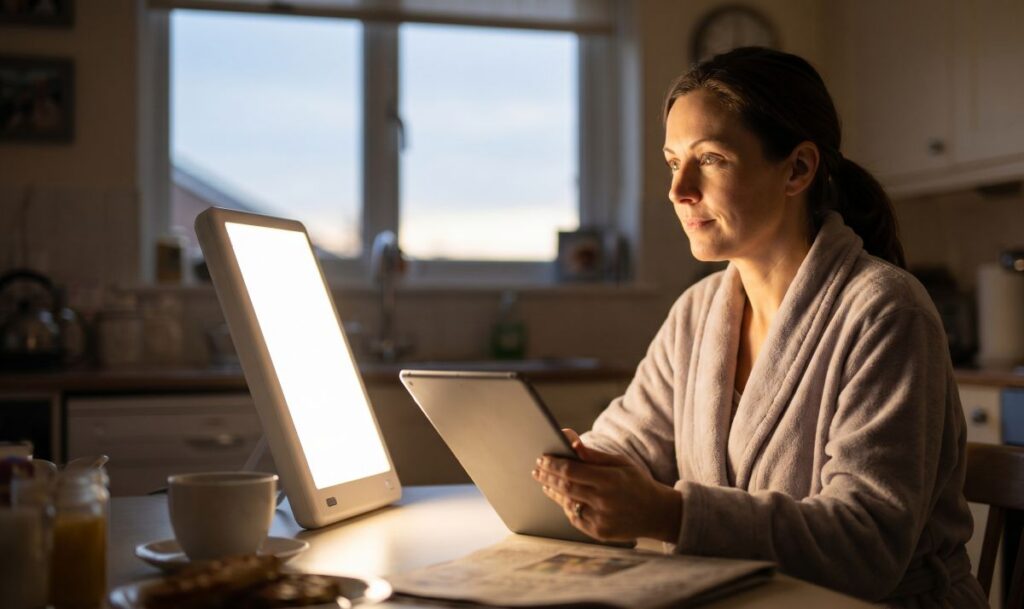
If there is one tool most closely tied to this topic, it is bright light therapy. Official guidance still puts it near the front of the line for winter-pattern SAD, which is why “bringing the sun inside” can be more than a nice phrase.
NIMH says light therapy has been a mainstay since the 1980s and describes a very bright light box at 10,000 lux used first thing in the morning for about 30 to 45 minutes. Mayo gives a similar practical frame, often around 20 to 30 minutes in the first hour after waking, depending on the box and directions. That is the core habit many readers are really searching for when they type natural SAD treatment into Google.
What kind of light box matters
A real SAD lamp is not the same thing as a cute desk lamp with a warm bulb. Mayo says the box should be made for SAD, give a therapeutic dose of light, and filter out UV, which is why a proper light box beats guessing with random home lighting.
Placement matters too. Your eyes stay open, but you do not stare straight into the lamp, and the distance should follow the maker’s directions instead of internet folklore.
When to use it
Morning is the usual sweet spot. The best-known guidance places use in the first hour after waking, because that timing lines up with the body clock rather than fighting it later in the day.
This is why “I’ll just use it at 9 p.m. while answering email” is not the same thing. For many people, that late use can feel odd, and for some, it may work against sleep instead of helping with winter grogginess.
When not to wing it
If you have bipolar disorder, past mania, certain eye problems, or meds that make you light-sensitive, do not freestyle this. Mayo and NIMH both flag extra caution there, and that is one part of the topic that is worth getting a real clinician involved in early.
Light at home goes beyond the lamp
A lamp can do a lot, but it works better when the rest of the home is not fighting it. If your mornings happen in the darkest corner of the apartment with blackout curtains half closed and your first hour goes straight from bed to phone, the body gets mixed signals.
Small room moves can help. Open blinds fast, eat breakfast near the brightest window, keep your work spot close to natural light, and let the first hour of the day look more like morning than like a cave.
Mayo’s advice to make your space sunnier, sit closer to bright windows, and get outside early sounds basic because it is basic. Basic is good here, since the daily win is not a dramatic reset but a room and a routine that stops telling your brain it is midnight all day.
Seasonal depression hacks that still work when you are busy
Many winter mood tips fail because they ask too much. A better list is short, plain, and easy enough to repeat on a Tuesday when work is loud and the sink is full.
Start with these moves: morning light, a walk outside before lunch if you can, a protein-based breakfast, a real meal before late afternoon, dimmer evenings, and a bedtime that stays close to the same hour most nights. None of that is glamorous, but glamour is not the point.
The point is rhythm. When daylight is low, rhythm becomes a form of care, and that is where the best seasonal depression hacks earn their keep.
Sleep, food, movement, and vitamin D still count
Winter mood articles often rush past the basics because they seem too simple. Still, the basics are often where a dark season starts to loosen its grip.
Sleep is a big part of this. Mayo’s self-care advice for SAD includes normalizing sleep patterns and cutting down on oversleeping and extra naps, which makes sense because winter-pattern SAD often comes with the urge to sleep longer and longer without feeling more rested.
Food matters too, though it is not a cure on its own. One reason winter eating can get messy is that low mood, low light, and fatigue all pull people toward fast comfort foods, while list-style nutrition pieces tend to focus on fish, lean protein, omega-3 fats, berries, and vitamin D-rich foods as steadier options during darker months.
That does not mean one banana fixes January. It means regular meals, enough protein, and less all-day sugar grazing can keep the body from swinging even harder when you are already low.
Movement is another plain fix that people skip because it sounds too obvious. Yet Mayo still lists regular exercise as part of SAD self-care, and outdoor light plus a walk can do double duty by giving you both activity and daylight at once.
Vitamin D belongs in this section, too, but with some restraint. NIMH says vitamin D deficiency may make winter-pattern SAD worse and that supplements may help some people, but the study results are mixed, which is why vitamin D makes more sense as a checked and tailored part of a plan than as a magic winter pill.
CBT-SAD, medication, and the point where you should stop guessing
A lot of natural SAD treatment content quietly leaves out therapy and medication because those do not fit the soft-glow winter aesthetic. That leaves readers with a very incomplete picture.
Official SAD guidance still centers on four main lanes: light therapy, psychotherapy, antidepressant medication, and vitamin D. NIMH also notes that CBT-SAD has been adapted for this exact seasonal pattern, with a focus on changing unhelpful winter thoughts and putting pleasant, planned activity back into the week.
That matters because some readers do not need one more lamp recommendation. They need a clinician, a therapist, or a real depression workup.
If symptoms are showing up most days, if work and home are slipping, if you are pulling away from people, or if the same pattern keeps coming back each winter, get checked. And if you are having thoughts of self-harm or suicide, use 988 right away.
Where psilocybin enters this topic, and where claims get shaky
This is the section that many readers on your site will care about most. It also needs the cleanest language, because curiosity is fine, but hype muddies the whole post.
There is a real reason psilocybin comes up in winter mood talks. Psilocybin interacts with the serotonin system, and current depression research around psychedelic compounds has become much more active in controlled settings. Johns Hopkins has described psilocybin as uniquely tinkering with the serotonin system, and NIH says experimental work under controlled conditions is showing promise for easing depression symptoms after a single dose. Psilocybin research is real. It is just not the same thing as a proven home SAD protocol.
That distinction matters because the standard SAD treatment pages from NIMH and Mayo do not list psilocybin as established care for winter-pattern SAD. They still point to light therapy, CBT, medication, and sometimes vitamin D.
The stronger published psilocybin signal is in major depressive disorder and controlled psychedelic-assisted settings, not in self-directed winter self-care. That is a different lane from saying a person should treat a dark season with an at-home mushroom plan and call it evidence-based.
There is another wrinkle here. A 2026 randomized placebo-controlled microdosing trial did not find reliable cognitive or emotional gains beyond placebo, even though participants generally described the experience as positive.
That does not mean every person feels nothing. It means the current microdosing data are still mixed, and a warm personal ritual is not the same as a clinically proven natural SAD treatment.
So the cleanest way to place psilocybin in this article is this: it belongs in the curiosity lane, the ritual lane, and the fast-moving research lane. It does not yet belong in the “this is one of the established core treatments for SAD” lane.
That more honest frame is actually better for trust. It lets readers keep the proven winter basics in place first, then decide whether a measured mushroom ritual belongs in their broader winter routine with clear eyes and real limits.
A winter ritual can keep the basics from falling apart
One reason My Sugar Magnolia has a lane here is not that winter depression needs prettier language. It is because ritual can make boring good habits easier to keep.
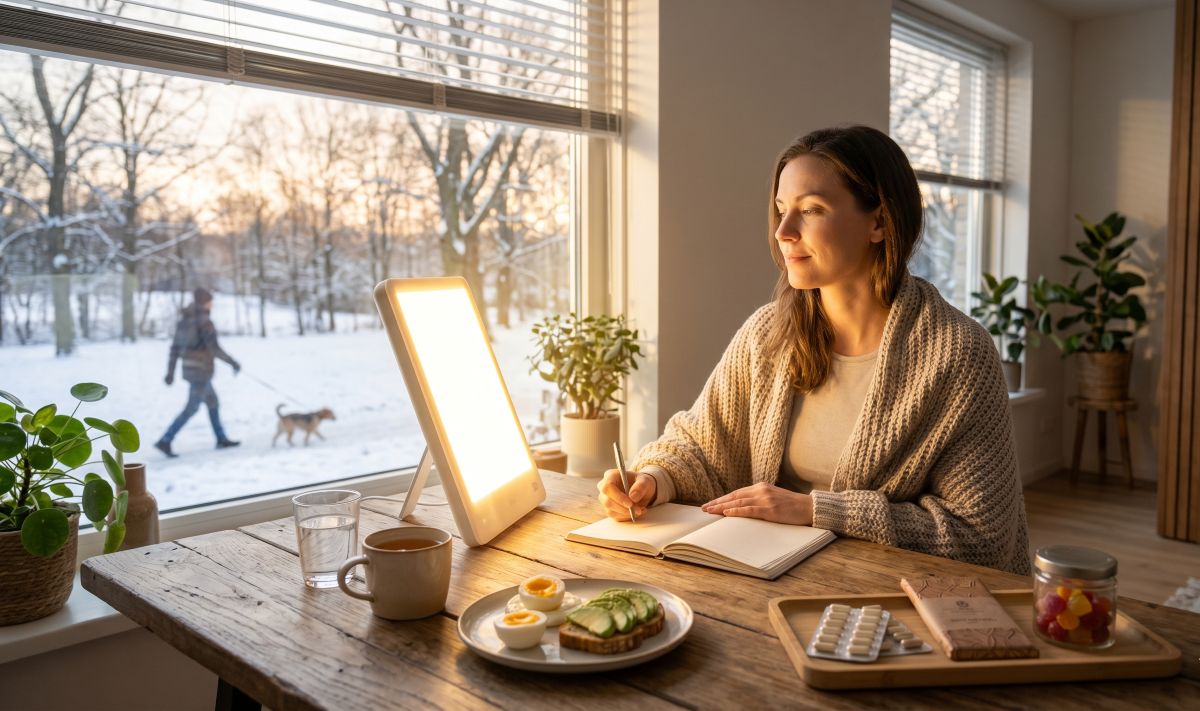
A lamp on a shelf is easy to ignore. A morning corner with a blanket, a bright lamp, water, a notebook, a warm drink, and ten quiet minutes is harder to skip because it feels like a part of the day rather than another task on a list.
That is where your own internal content already fits this topic well. Pieces on daily rituals, self-care, mindfulness, breathwork, and microdosing and meditation can sit around this blog naturally because they turn a winter plan into something a reader can actually live with.
A softer product lane for darker months
Once the basics are in place, format matters. Some readers do not need more theory. They need a winter routine that feels measured, calm, and easy to repeat.
If a clean morning format sounds right, capsules are the straightest option on your site. The product page lists 200mg per capsule, 20 capsules per bag, and a 3-day-on, 2-days-off rhythm, which makes them a simple fit for readers who like structure and consistency.
If winter calls for something slower and more sensory, the chocolate bar fits that mood. The page lists 20 pieces at 200mg each and suggests starting with half to one square, which makes it feel more like a calm evening ritual than a hard-edged routine.
For readers who want a lighter, more playful format, gummies sit in that lane. The page lists half to one gummy, or about 100 to 200mg, which can feel less formal while still keeping the dose clear.
Then there are the 500mg gummies. The product page makes clear that each gummy is 500mg rather than the site’s more usual 200mg, so this reads as a stronger format and not the first stop for a brand-new reader who is still learning her winter rhythm.
For readers who need help choosing a format or dose, your own dose guide and capsules vs gummies post fit this article cleanly. They let a reader move from winter mood education into product fit without making the jump feel forced.
FAQ
Is SAD the same as the winter blues?
No. The winter blues are usually lighter and more short-lived, while SAD is a depressive pattern linked to the season and can last for months. NIMH also separates SAD from holiday stress and notes that the diagnosis depends on a repeated seasonal pattern.
Do SAD lamps really work?
They can. Official guidance from NIMH and Mayo still places bright light therapy near the front of the line for winter-pattern SAD, especially a 10,000-lux box used early in the day.
When should I start light therapy?
Many people start in the fall, before the darkest stretch hits hard. NIMH says people with a history of SAD may benefit from starting treatment before the season that usually triggers symptoms.
Can vitamin D fix seasonal depression by itself?
Sometimes vitamin D belongs in the plan, but the evidence is mixed. NIMH says deficiency may play a part in winter-pattern SAD, yet vitamin D study results are not consistent enough to treat it like a one-pill answer.
Why do I want carbs and sleep so much in winter?
That pattern is common in winter-pattern SAD. NIMH lists oversleeping, carb cravings, overeating, and social withdrawal among the winter-specific signs.
Is psilocybin a proven natural SAD treatment?
Not at this point. Psilocybin research in depression is active, but current official SAD treatment pages do not list it as established care, and a 2026 placebo-controlled microdosing trial did not find reliable emotional or cognitive gains beyond placebo.
Can I have SAD even if I do not live in a very cold place?
Yes. Living farther north raises the odds, but it is not the only factor. NIMH notes that SAD is more common in women and in people with depression or bipolar disorder as well.
When should I talk to a clinician?
Talk to one when the pattern keeps returning, your days are getting harder to manage, or the mood drop is not lifting. If self-harm or suicidal thoughts are in the picture, use 988 right away.
Let the room get brighter first
The real heart of this topic is not finding one clever winter fix. It is learning how to give your brain and body more light, steadier timing, better sleep, warmer routines, and a room that does not feel like dusk at noon.Start there. Then, if a measured mushroom ritual fits your winter rhythm, look at capsules, chocolate, gummies, or 500mg gummies in a calm, honest way. And for women who want a closer tie to the brand, the Sugar Mama circle adds a softer way to stay close to Sugar Magnolia beyond a single order.