
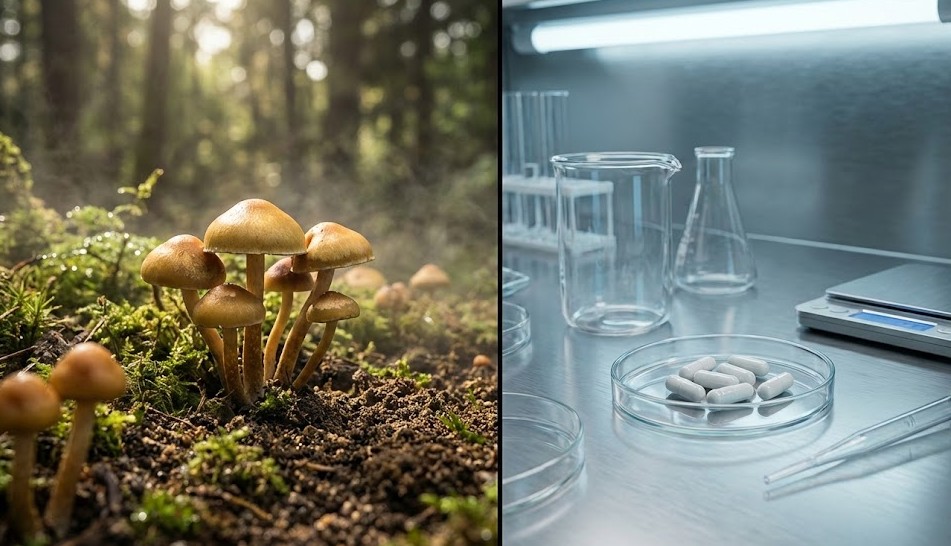
The Ethics of Sourcing: Why ‘Organic’ Matters in Psychedelics
Have you ever wondered about the difference between organic mushrooms vs synthetic psychedelics? This question is about more than chemistry—it touches on ethics, wellness, and spirituality.
The way our psychedelic products are sourced can affect our bodies and our conscience. Choosing organic sources isn’t just a trend; it’s a commitment to safer experiences and respectful practices.
Natural vs. Synthetic: What’s the Difference?
Not all psychedelics come from a lab. Some grow from the earth in the form of plants and fungi, while others are made in sterile laboratories.
When we say “organic” in this context, we mean psychedelic substances derived from natural sources like magic mushrooms rather than synthesized compounds. On the other hand, “synthetic” refers to isolated chemicals produced by scientists. Both can have similar effects on the mind, but there are key differences in their composition and how people feel about them.
Natural psychedelics, like psilocybin mushrooms, have been part of human culture for ages. Ancient communities used them in sacred rituals and healing practices.
In modern times, many people are rediscovering these organic substances as tools for personal healing and self-discovery. Synthetic psychedelics (for example, lab-made psilocybin or LSD) are newer inventions. Scientists create these to ensure consistency and purity of the active compound. The intention behind synthetic versions is often to make dosing more predictable for medical use.
The Full-Spectrum Experience of Organic Mushrooms
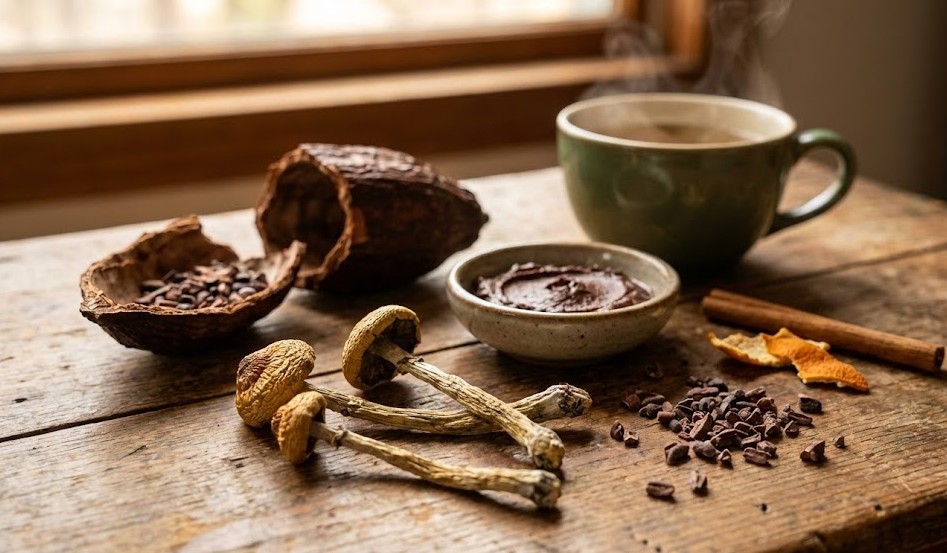
Whole mushrooms are more than just one compound. A magic mushroom contains psilocybin and a variety of other natural substances.
These additional compounds work together in ways science is still uncovering. Some researchers call this the “entourage effect,” meaning the combination of ingredients might produce a richer effect than any single molecule alone. For someone taking an organic mushroom, this could translate into a gentler, more rounded psychedelic experience.
People who have tried both organic and lab-made psilocybin often notice a difference. In one small study, participants described the whole mushroom experience as “more alive and colorful” than taking pure synthetic psilocybin (study findings).
Colors seemed brighter, and emotions were more intense with the natural mushrooms. By contrast, the effects of the synthetic version felt a bit more mechanical. One person said taking the lab-made drug was like “looking through a window” rather than being fully present in the experience.
These reports suggest that the extra compounds in mushrooms might add something special that a lab chemical alone can’t replicate.
Beyond the subjective feel, there may be physical benefits to the full-spectrum composition of mushrooms. Early research on animals has hinted that mushroom extracts could have stronger or longer-lasting effects on the brain compared to pure psilocybin.
While more studies are needed, the idea is that nature’s mixture could stimulate brain receptors differently. This might boost positive outcomes like a boosted mood or personal breakthroughs.
When you consume an organic mushroom product, you are getting this whole package that humans have evolved alongside for thousands of years.
Consistency and Control: The Case for Synthetics
It’s important to acknowledge why synthetic psychedelics exist. One big reason is consistency.
Every mushroom can be a little different in strength. Factors like growing conditions and mushroom strain mean that two pieces from the same batch might not be exactly alike in potency.
For casual users, this variability can lead to surprises—one dose might feel mild, and another dose could feel much stronger. In a therapeutic or medical setting, unpredictability is a problem.
Doctors and researchers need precise doses to make sure treatments are safe and repeatable.
Lab-produced psilocybin offers that precision. When a therapist gives a patient a 25-milligram capsule of synthetic psilocybin, they know it contains exactly that amount of the active ingredient.
This level of control has helped psychedelics gain acceptance in clinical trials. For example, recent clinical trials for depression often use synthetic compounds to meet strict regulatory standards.
Consistent dosing reduces the risk of unwanted extreme reactions and helps clinicians guide patients through sessions more reliably.
However, the controlled nature of synthetics comes with a trade-off. As mentioned earlier, many users feel that something is missing from the experience.
Some have described the pure-pill approach as feeling “more medicine-y and less spiritual.” It can still be effective for creating visions and realizations, but the overall quality might not feel as warm or fulfilling for some individuals.
In short, synthetic psychedelics focus on consistency, whereas organic ones carry the unpredictability (and perhaps the charm) of nature.
Spiritual and Energetic Considerations
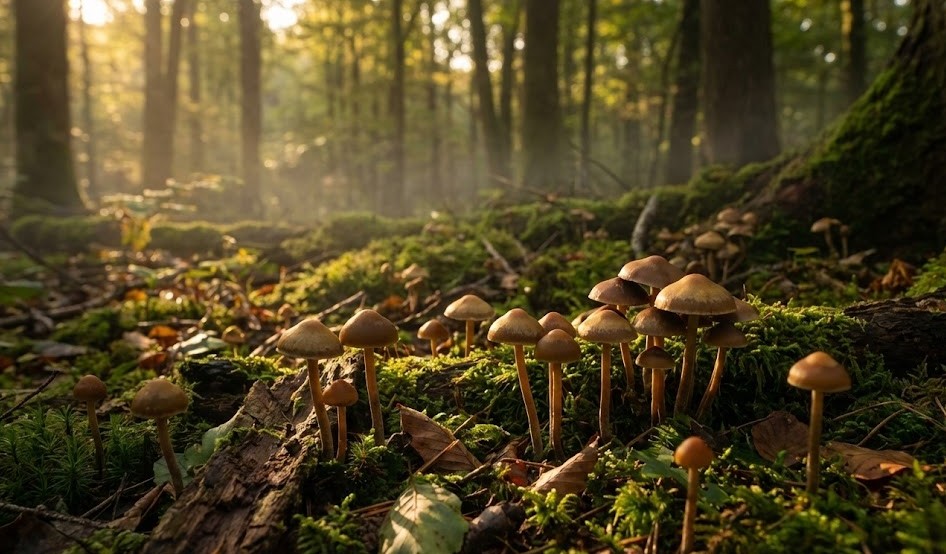
Psychedelics aren’t just about biochemical effects; they often hold great meaning for users. Many people approach substances like psilocybin as sacred tools for personal growth or connecting with something greater.
In these spiritual contexts, ethical psychedelic sourcing becomes extremely important. The idea of “spiritual hygiene” has emerged to describe keeping your practice clean and respectful.
This means paying attention to where your substances come from and how they were produced.
Imagine two scenarios: In one, you have a mushroom that was cultivated with care, maybe by a small grower using organic methods and positive intentions. In the other, you have a pill that was manufactured in bulk by a pharmaceutical company purely for profit.
Some individuals believe that the energy or intention behind a psychedelic can influence the experience it gives. An organically grown mushroom, tended with love, is thought to carry a kind of natural wisdom and positive vibe.
Users often talk about feeling a “connection to the earth” or a guiding spirit when taking these mushrooms.
On the flip side, a synthetic drug might feel emotionally colder. It does the job chemically, but it lacks the story and spirit of a living organism.
One participant from the earlier study noted that while all forms (natural and synthetic) did have therapeutic effects, the whole mushroom felt “sacred, alive, unmanipulated by humans and natural.”
This doesn’t mean synthetic psychedelics are bad or ineffective; many people have had remarkable healing experiences with lab-made substances. But for those who care about a spiritual dimension, the source can matter a lot.
It’s similar to the difference between eating a home-grown garden tomato versus a flavorless store-bought tomato—you get nutrients from both, but the home-grown one might just feel better.
Ethical psychedelic sourcing also extends to respecting cultural traditions. Many natural psychedelics (like certain mushrooms, ayahuasca, or peyote) have been used in indigenous ceremonies for generations.
These practices treat the plants and fungi with reverence, often accompanied by prayers or rituals during harvest.
If you choose organic sources, especially from communities that grow or wild-harvest these substances, it’s important to respect their methods. Ethical sourcing means knowing the chain of custody – who grew the product, whether they were paid fairly, and if anything was harmed in the process.
Safety, Purity, and Environmental Impact
Choosing organic sources isn’t just an abstract idea—it has real effects on both your safety and the planet.
Organic mushrooms are typically grown without harsh pesticides or chemicals. This is good news for your body, because mushrooms are known to absorb elements from their surroundings.
A mushroom grown in clean, controlled conditions will have a cleaner profile. It reduces the risk of ingesting unwanted toxins or heavy metals.
When you buy from a source that prioritizes organic cultivation, you can feel more confident about what’s (and what isn’t) in your product.
Synthetic psychedelics, being lab-made, are often very pure in terms of containing the single target molecule. However, the manufacturing process for these chemicals can involve strong solvents and other reagents.
Responsible producers will remove those residues, but there’s always the question of how the drug was made. On an industrial scale, chemical synthesis can produce waste or require resources that affect nature.
Meanwhile, growing mushrooms (especially indoors or on farms) is relatively low-impact if done responsibly. Spent substrate (the material mushrooms grow on) can even be composted.
In this way, organic mushroom farming is gentle on the planet.
Environmental ethics come into play with certain psychedelic sources. Take the example of the Sonoran Desert toad.
This toad’s venom contains a strong psychedelic compound (5-MeO-DMT), and it became popular for a while. Unfortunately, people started harassing and “milking” wild toads to get the venom, which put the species at risk.
Conservationists have urged psychonauts to use laboratory-made 5-MeO-DMT instead of harming these animals (National Geographic report). In this case, a synthetic option is actually the more ethical choice to protect a living creature.
The takeaway is that ethical sourcing sometimes means saying no to a natural product if it endangers a species or ecosystem.
Another example is the peyote cactus, which contains mescaline. Peyote is sacred to many Native American communities and grows slowly in the wild.
Lately, increased outsider demand has threatened its survival in some regions. Indigenous leaders have asked that non-Native people refrain from using wild peyote to preserve it for traditional use.
They suggest using alternative mescaline sources (like the faster-growing San Pedro cactus or synthetic mescaline) for those who are not part of Native ceremonies. This example shows that “organic” should not mean taking without thinking. Truly ethical sourcing means considering the long-term effects of harvesting natural psychedelics.
Consumer Preference and Well-Being
It turns out that many people naturally gravitate towards products they perceive as natural. There’s a broad trend in wellness where “natural” is seen as safer or gentler.
This is true for foods, supplements, and yes, psychedelic substances. One reason the topic of organic mushrooms vs synthetic mushrooms comes up is that consumers are questioning what’s best for their physical and mental well-being.
In surveys and studies, many individuals say they feel more comfortable with plant-based or fungus-based medicine compared to a lab compound. They believe that something coming from nature is less likely to harm them, even if that belief isn’t always scientifically accurate.
Researchers have noted that people often prefer natural options for prevention and overall wellness. They tend to care less about natural vs. synthetic when trying to cure a pressing issue.
This might explain why microdosing with organic mushroom products has become popular among those looking to boost mood or creativity.
It just feels intuitively better for some to take a tiny bit of mushroom rather than a pill made in a factory.
From a well-being perspective, feeling good about what you take is important. If you have doubts or guilt about a substance, that anxiety can cloud the experience.
On the contrary, knowing that your psychedelic was sourced ethically and organically can give peace of mind. It sets a positive mindset even before the substance takes effect.
In psychedelic use, mindset (or “set”) is famously a major factor in how the experience unfolds. By choosing an option you trust—say, an ethically sourced mushroom chocolate or capsule—you’re already creating a safer, more positive space for yourself mentally.
The Impact of Ethical Sourcing on Psychedelic Culture
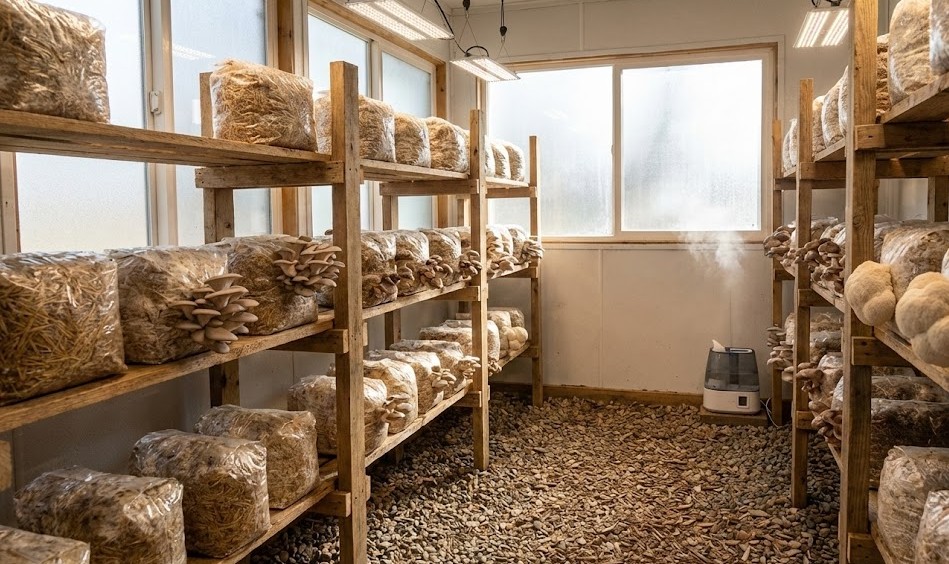
When more people insist on ethically sourced psychedelics, everyone benefits. This demand encourages producers to adopt transparent and fair practices.
For instance, some companies now partner with local growers or indigenous groups, ensuring those producers get proper compensation and recognition.
Buying from organic and ethical sources can help redirect money away from underground markets that might over-harvest or ignore safety. Instead, it rewards those who grow or conscientiously synthesize psychedelics.
In the long run, pushing for ethical psychedelic sourcing could also influence laws and public acceptance. If society sees that psychedelics can be done in a caring, responsible manner, it may reduce stigma.
It pushes back against the old narrative of psychedelics being dangerous or associated with shady activities.
Imagine a future where licensed facilities cultivate mushrooms with organic methods out in the open. Labs might produce psychedelic compounds using green chemistry principles, all with transparency and accountability.
This kind of future feels more attainable when consumers voice that they prioritize ethics as much as outcomes.
Making Your Choice: Organic, Synthetic, or Both?
Deciding between organic mushrooms vs synthetic psilocybin ultimately comes down to your goals and values. It’s not a black-and-white answer—both have their place.
If you value a holistic experience and appreciate the tradition behind naturally grown psychedelics, organic is likely the way to go. The full spectrum of mushroom compounds can offer an added richness that you might not get from an isolated chemical.
You might find meaning in knowing your mushroom had a natural growth cycle, came from the earth, and was handled with care.
On the other hand, if precision is your priority, if you have a specific medical reason, or if you live somewhere that accessing safe natural products is difficult, a synthetic option can be valid.
There is no shame in choosing a lab-made psychedelic under the right circumstances. Sometimes, the most ethical path is using a synthetic to avoid harming nature or to ensure accurate dosing for therapy.
Some people embrace both approaches. They might enjoy organic mushrooms for a personal, spiritual ritual, but use a precise synthetic dose under supervision for therapeutic purposes.
Above all, be mindful of each choice. Ask questions about sourcing: if it’s organic, was it grown responsibly? If it’s synthetic, was it produced by a reputable lab following safety standards?
By learning about the ethics of sourcing, you equip yourself to make choices that are safe, informed, and in harmony with your principles.
Discover Ethical Organic Options with Sugar Magnolia
At Sugar Magnolia, we understand how important it is to align quality, safety, and ethics. That’s why all of our products are made with organically sourced magic mushrooms.
We take pride in providing options that honor both your wellness and the planet. Curious about what we have in store? Here are a few of our beloved products:
- Microdose Capsules: Our capsules contain a precise blend of organic mushroom extract in an easy-to-take form. They’re perfect for those who want a consistent microdose as part of their routine.
- Mushroom Chocolate Bar: Satisfy your sweet tooth with our decadent chocolate bar, infused with our signature organic mushroom blend for a gentle dose. It’s a delicious way to journey, made with love and natural ingredients.
- 500mg Gummies: For a fruity twist, try our gummies (500mg). These bite-sized treats are tasty and carefully made with measured doses of organically grown mushrooms.
- Microdose Gummy Variety: If you prefer smaller doses or just love gummies, our assorted gummies pack gives you flexibility. These treats are made with the same organic principles, so you can feel confident about what you’re consuming.
Each of these products is crafted according to our ethical psychedelic sourcing standards. We want you to feel great about your choice from the first glance to the final reflection on your experience.
Want to get more involved with Sugar Magnolia? We invite you to become part of our family through the Sugar Mama program.
As a Sugar Mama, you’ll join a welcoming circle of like-minded women who share a passion for mindful plant medicine. You’ll get exclusive perks, wholesale pricing on products, and a chance to help spread the message of responsible, heart-centered psychedelic use.
Conclusion
Choosing organic versus synthetic psychedelics is about finding what feels right to you. For many, organic mushrooms offer a sense of connection—to nature, to tradition, and to a more holistic experience.
Synthetic options provide consistency and have their own place, especially in therapeutic settings. By learning about the ethics of sourcing, you equip yourself to make choices that are safe, informed, and in harmony with your principles. Psychedelics have the power to open our minds and heal our hearts. When we source them responsibly, we make sure this power is used in a way that honors ourselves, others, and the earth.