
Mom Brain Cure: The Neurogenesis and Cognitive Repair Science Moms Actually Need

You’ve lost your keys, forgotten a name, or stared blankly at a sentence you’ve read three times. Someone, somewhere, laughs and says, “Oh, that’s just mom brain.”
What if that explanation is selling you short?
Emerging research shows that motherhood triggers measurable structural changes in the brain, not just a bad night’s sleep. This isn’t about fatigue or distraction. It’s neuroscience, and it’s time we talked about it properly.
What Is “Mom Brain”? The Real Neurological Changes After Pregnancy
“Mom brain” gets thrown around like it’s a punchline, but what’s actually happening inside your head is anything but funny. It’s not forgetfulness or distraction. It’s your brain undergoing one of the most significant structural changes of your adult life.
Research confirms gray matter volume reduces by up to 4.9% across nearly 94% of the brain during late pregnancy. That sounds alarming, but it’s not damaged. It’s your brain pruning inefficient connections to build sharper, more targeted ones.
Why Does This Happen?
Pregnancy hormones, specifically estrogens and progesterone, signal your brain to restructure around a new priority: keeping your baby safe. The regions most affected include:
- Amygdala – heightened threat detection and emotional response
- Prefrontal cortex – sharper decision-making under pressure
- Hippocampus – bonding, memory formation, and stress regulation
So why does it still feel like cognitive chaos? Sleep deprivation and elevated stress hormones temporarily pull resources away from multitasking and episodic memory. Your brain isn’t broken. It’s just running a completely different operating system right now.
Longitudinal studies confirm no net cognitive loss. Hippocampal neurogenesis rebounds in midlife, and gray matter renormalizes within months postpartum. The mom brain cure starts with understanding that this is adaptation, not decline.
How Hormonal Shifts After Motherhood Affect Memory, Focus, and Clarity
Estrogen isn’t just a reproductive hormone. It’s a key player in how your brain stores memories, maintains focus, and protects itself from damage. When estrogen levels drop sharply after birth, your cognitive function feels it almost immediately.
During pregnancy, estrogen peaks reshape neural pathways throughout the brain. Postpartum, those levels plummet. If you’re breastfeeding, oxytocin adds another layer of hormonal fluctuation on top. The result is disrupted hippocampal neurogenesis, slower processing speed, and episodic memory gaps that make you feel like you’re losing your mind.
What Estrogen Actually Does for Your Brain
Before we talk about the drop, it helps to understand what estrogen is managing day-to-day:
- Memory formation – boosts acetylcholine synthesis, a neurotransmitter critical for learning
- Neuron communication – enhances hippocampal signaling for sharper recall
- Neuroprotection – improves blood flow and reduces brain vulnerability to damage
- Mood regulation – influences serotonin receptor activity and emotional stability
Why Women Experience This Differently
Men’s testosterone levels remain relatively stable, but women’s estrogen fluctuates cyclically, making the postpartum crash significantly more disruptive. Research even shows prior motherhood changes how women respond to hormone therapies later in life. Emerging therapies targeting neuroplasticity are worth paying attention to for exactly this reason.
Neurogenesis Explained: How the Brain Rebuilds and Reconnects
Your brain isn’t fixed. It’s constantly changing, adapting, and yes, repairing itself. That’s the core idea behind neurogenesis, and it’s one of the most hopeful pieces of science for any mother dealing with cognitive fog.
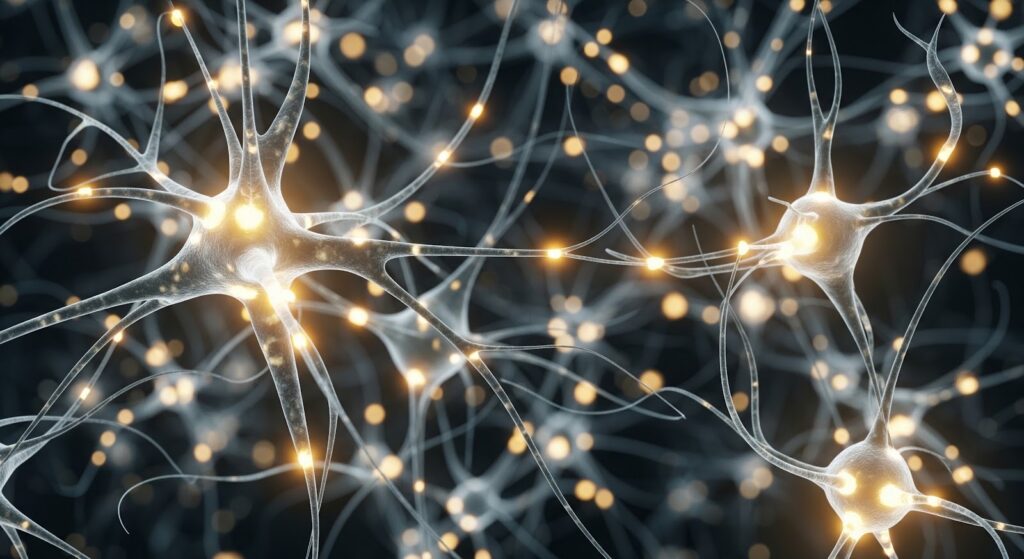
Neurogenesis is the process of generating new neurons in the adult brain, primarily in the hippocampus, which is the region most responsible for memory and learning. It doesn’t stop after childhood. It continues throughout your life, though the rate slows without the right conditions to support it.
Where BDNF Comes In
BDNF, or brain-derived neurotrophic factor, is essentially the brain’s growth support system. It promotes the survival, growth, and integration of new neurons while strengthening the synaptic connections that make memory and learning possible. Without adequate BDNF, new neurons struggle to take hold.
Here’s what influences BDNF levels directly:
- Exercise – aerobic activity is one of the most reliable BDNF boosters
- Sleep – deep sleep cycles are when much of neural repair actually happens
- Novel experiences – learning new skills stimulates neurogenesis
- Nutrition – specific nutrients directly support BDNF production
Cognitive Fog Is Temporary, Not Permanent
Postpartum estrogen drops temporarily suppress BDNF activity, which is a key reason cognitive fog feels so persistent in early motherhood. But maternal brains also show heightened plasticity overall, with gray matter rebounding and hippocampal neurogenesis picking back up over time.
The science is clear: postpartum cognitive fog is a repairable state. Your brain isn’t broken. It’s rebuilding, and understanding that changes everything about how you approach recovery.
Lion’s Mane Benefits for Women: Supporting Memory, Focus, and Neurogenesis
Let’s clear something up before we go any further. Lion’s Mane is not a psychedelic mushroom.
It won’t alter your perception or produce any kind of high. It’s a functional mushroom, meaning it’s used specifically for its health-supporting properties, and when it comes to brain health, the research is genuinely compelling.
Lion’s Mane (Hericium erinaceus) has been used in traditional medicine for centuries. What modern science has added is an understanding of why it works, and the answer comes down to two key bioactive compounds.
Hericenones and Erinacines: The Active Ingredients
| Compound | Source | Primary Action |
| Hericenones | Fruiting body | Stimulates NGF (nerve growth factor) production |
| Erinacines | Mycelium | Crosses blood-brain barrier to boost BDNF and NGF |
Both compounds work by encouraging your brain to produce more of the growth factors it needs to repair, regenerate, and strengthen neural connections. For a postpartum brain already working overtime to rebuild, that’s meaningful support.
Why This Matters Specifically for Mothers
Postpartum estrogen drops suppress BDNF, which is exactly the protein your brain needs most for neurogenesis and cognitive repair. Lion’s Mane directly supports BDNF production, which makes it particularly relevant for mothers navigating that hormonal transition.
Clinical research backs this up with some specific findings worth knowing:
- Cognitive speed improved by 6.7% in acute trials at 1-3 grams daily
- Memory scores improved in mild cognitive impairment studies over 12 to 49 weeks
- Anxiety and irritability reduced in menopausal women, relevant given postpartum hormonal parallels
- Inflammation markers like IL-6 decreased, supporting overall brain health
What to Expect From Lion’s Mane Supplements
This isn’t a quick fix, and it’s worth being upfront about that. Lion’s Mane benefits build gradually over four to twelve weeks of consistent use. Results also tend to fade when supplementation stops, which tells you something important: it works best as part of a sustained approach, not a one-time intervention.
For mothers specifically, the most relevant benefits are improved focus, better emotional regulation, and support for the kind of multitasking that postpartum life demands constantly. At 1-3 grams daily, it has a strong safety profile and fits naturally alongside sleep optimization and nutritional support as part of a broader cognitive recovery approach.
How Psilocybin Supports Neural Connectivity and Cognitive Flexibility
Psilocybin is the active compound found in certain mushroom species, and it’s generating serious scientific attention right now. Not for recreational reasons, but because of what it does to brain network activity at a neurological level.
When psilocybin binds to serotonin 2A receptors, it temporarily disrupts the default mode network, the part of your brain responsible for rigid, self-referential thinking. The result is increased connectivity across brain regions that don’t typically communicate, creating a window of cognitive flexibility that researchers describe as a kind of neural reset.
Macrodosing vs. Microdosing: What’s the Difference?
These two approaches produce very different experiences and are worth distinguishing clearly:
| Macrodosing | Microdosing | |
| Dose | 20-30mg psilocybin | 0.1-0.3g every few days |
| Experience | Profound, hours-long altered state | Sub-perceptual, no altered state |
| Reported benefits | Emotional processing, lasting network changes | Subtle focus and creativity improvements |
| Evidence base | Clinical trial data available | Largely anecdotal currently |
What This Could Mean for Postpartum Cognition
For a postpartum brain locked into hyper-focused caregiving mode, psilocybin’s ability to loosen rigid neural patterns is theoretically relevant. It promotes BDNF upregulation and dendritic spine growth, both directly tied to neuroplasticity and cognitive repair.
Women may also respond differently due to estrogen’s influence on serotonin pathways, particularly during low-hormone phases like the postpartum period. That’s an area of active research worth following closely.
Legality varies significantly by location, and this is not a self-experimentation recommendation. Individual research, medical guidance, and responsible decision-making are non-negotiable starting points.
Why Lion’s Mane and Psilocybin Work Better Together for Cognitive Repair
Lion’s Mane and psilocybin work through different mechanisms, but they’re pointing at the same goal: helping your brain rebuild stronger, more flexible neural connections. That complementary action is exactly why researchers are starting to look at them together.
Think of it this way. Lion’s Mane lays the groundwork by stimulating NGF and BDNF production, giving your neurons the growth support they need to form and strengthen new connections.
Psilocybin then creates the conditions for those connections to integrate, disrupting rigid network patterns and opening up communication across brain regions that don’t typically interact.
Two Mechanisms, One Direction
| Lion’s Mane | Psilocybin | |
| Primary action | Stimulates NGF and BDNF production | Disrupts default mode network rigidity |
| Key benefit | Neurogenesis and synaptic strengthening | Increased neural connectivity and flexibility |
| Timeline | Builds over weeks of consistent use | Acute effects with lasting network changes |
| Role in repair | Cellular foundation | Rewiring environment |
Long-Term Repair, Not a Quick Fix
The most important thing to understand about this combination is that it’s oriented toward sustained recovery, not stimulation. Lion’s Mane maintains elevated BDNF over time, while psilocybin’s network resets have been shown to persist for weeks post-experience. Together, they may support the kind of deep cognitive repair that postpartum mothers actually need.
No direct clinical trials have confirmed their combined effects yet, but the mechanistic overlap is compelling enough that research interest is growing. Always consult a healthcare professional and understand the legal context for psilocybin in your region before exploring this further.
A Thoughtful Approach to Cognitive Repair: Sugar Magnolia Blend
If you’ve read this far, you already understand that postpartum cognitive recovery isn’t about a single fix. It’s about supporting the right conditions for your brain to do what it’s already designed to do.
That’s the thinking behind Sugar Magnolia products. It’s a functional mushroom blend built around intentionality, combining ingredients that directly support BDNF and NGF production without overstimulation or overclaiming. It’s not positioned as a cure. It’s designed as a conscious, consistent ally for women navigating the mental demands of post-motherhood life.
Designed With Women’s Cognitive Health in Mind
What makes Sugar Magnolia relevant here is our alignment with the mechanisms we’ve covered throughout this article. Complementary adaptogens support stress resilience and hormonal balance. Together, they create conditions for clearer thinking, steadier focus, and better emotional regulation over time.

This is cognitive boost support for mothers that fits into real life, alongside sleep, nutrition, and the other foundations of brain recovery. Subtle, sustained, and grounded in how the maternal brain actually works.
“Mom Brain” Isn’t Decline—It’s a Stage of Rewiring
The cognitive fog, the forgetfulness, the mental fatigue…none of it means your brain is failing you. It means your brain is adapting to one of the most demanding biological experiences a human body can go through.
The science is clear: neurogenesis continues, BDNF rebounds, and gray matter renormalizes. Your brain is wired for repair. The cure for mom brain isn’t a single solution…it’s informed, intentional support that works with your biology, not against it.
Sugar Magnolia exists for exactly this reason: thoughtful, conscious support for minds that deserve better. Ready to join our community? Become a Sugar Mama and get access to intentional brain support designed with you in mind.