
Liberty Cap Mushrooms: Your Complete Guide to Psilocybe semilanceata
Liberty Cap mushrooms hold a special place in psychedelic history as one of nature’s most potent psilocybin-containing species.
These tiny grassland mushrooms pack a serious punch despite their humble size. Found across temperate regions worldwide—from the Pacific Northwest to the rolling hills of Europe—Liberty Caps have captured the curiosity of mycologists, researchers, and wellness seekers for centuries.
It is named after the Phrygian cap worn by freed Roman slaves; it carries deep symbolism around freedom and expanded consciousness.
This guide covers everything you need to know about Psilocybe semilanceata. You’ll learn how to identify them, understand their effects, and stay safe whether you’re simply curious or exploring therapeutic potential.
In This Article
What makes Liberty Caps so special
How to identify Liberty Cap mushrooms
Dangerous look-alikes you must know
Understanding Liberty Caps’ effects
Current legal status in the United States
What makes Liberty Caps so special
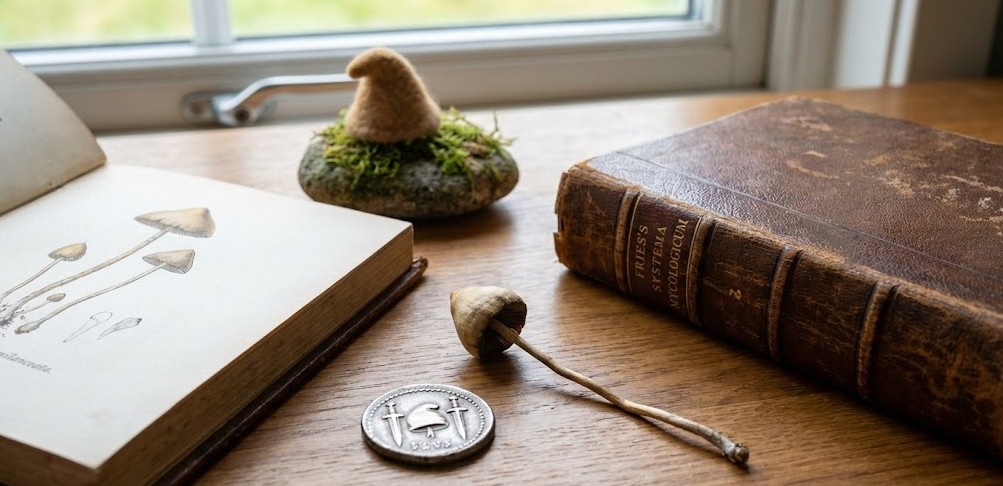
Psilocybe semilanceata—that’s the scientific name you’ll see in mycology books. These small, bell-shaped mushrooms belong to the family Hymenogastraceae, A-Z Animals, within the order Agaricales.
Swedish mycologist Elias Magnus Fries first described them in 1838 as Agaricus semilanceatus. German mycologist Paul Kummer later transferred them to the Psilocybe genus in 1871. The Latin name breaks down beautifully: Psilocybe comes from Greek words meaning “bare head,” while semilanceata means “half spear-shaped.”
Liberty Caps earned their common name from their resemblance to the Phrygian cap. This soft, pointed hat became a powerful symbol during the Roman Empire. Freed slaves received one during manumission ceremonies to mark their new status.
The symbolism runs deep throughout Western history. After Julius Caesar’s assassination in 44 BC, liberty caps appeared on coins between two daggers. French revolutionaries wore them as bonnets rouges during their fight for equality. American colonists raised liberty poles topped with these caps as they declared independence.
When 19th-century mycologist Mordecai Cubitt Cooke named these mushrooms “liberty caps” in 1871, he was connecting their distinctive pointed shape to centuries of freedom symbolism. For many today, that connection feels especially fitting.
How to identify Liberty Cap mushrooms
Accurate identification matters more with Liberty Caps than almost any other mushroom. Their small size and brown coloring place them among what mycologists call “little brown mushrooms”—a category with many look-alikes, including deadly species.
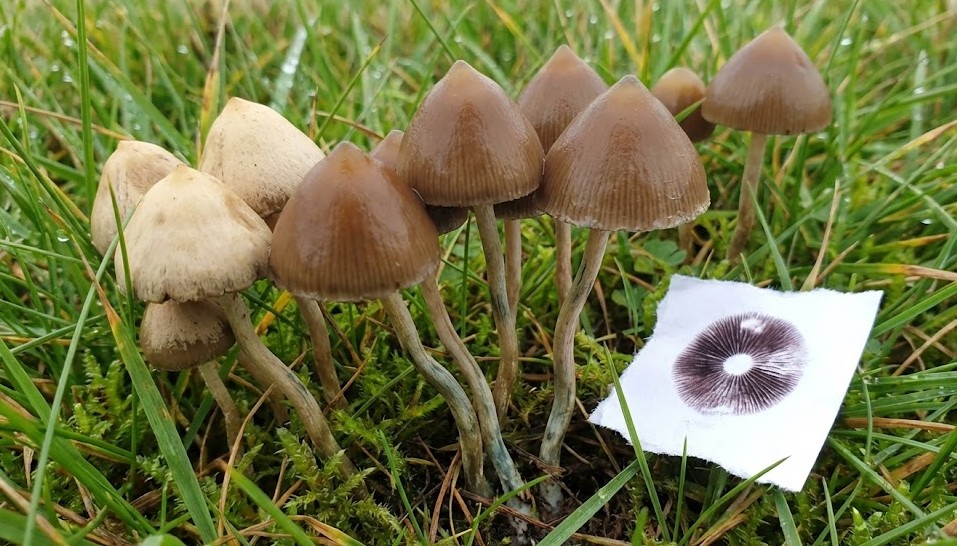
The cap tells the biggest story. Liberty Caps measure just 5–25 mm across and 6–22 mm tall. The shape stays sharply conical to bell-shaped throughout their lifespan. A distinctive nipple-like bump (called a papilla or umbo) sits at the very top—this is your most reliable visual marker.
When wet, the caps turn chestnut brown to caramel colored. You’ll notice the surface looks almost translucent, with the gills visible through the cap. As they dry, the color shifts dramatically to pale cream or buff yellow. This color-changing property is called being “hygrophanous.”
The pellicle test helps confirm your identification. Gently try peeling the thin, gelatinous membrane from the cap’s surface when the mushroom is moist. On true Liberty Caps, this clear layer separates cleanly—a feature many look-alikes lack.
The stem provides more clues. It runs 4.5–14 cm long but stays remarkably thin at just 1–3.5 mm wide. The texture feels fibrous and flexible. True Liberty Cap stems bend and twist without snapping easily. The color matches or runs slightly lighter than the cap.
Gill color changes with age. Young specimens show cream-colored gills. These darken from gray to purple-brown as spores mature. The gills attach narrowly to the stem rather than running down it.
Spore print color is your most definitive test. Liberty Caps produce a dark purplish-brown to purple-black spore print. This single test rules out the deadliest look-alikes, which produce rust-brown spores. To take a print, remove the cap, place it gills-down on white paper, cover with a glass, and wait 24 hours.
Blue bruising occurs where the mushroom gets damaged, though less dramatically than in some Psilocybe species. Check the lower stem and base after handling. This color change indicates psilocybin is oxidizing into psilocin.
Dangerous look-alikes you must know
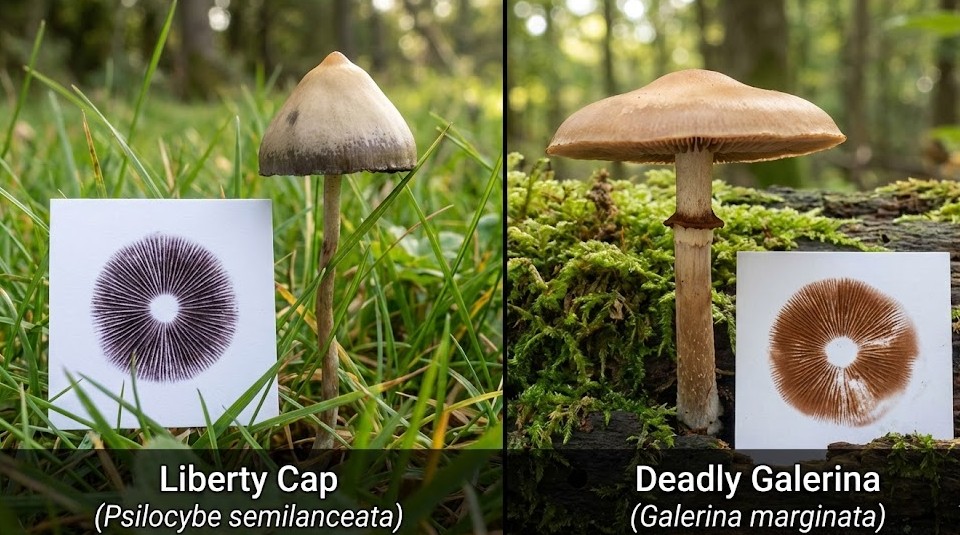
Here’s where things get serious, Sugar. Several mushroom species resemble Liberty Caps closely enough to cause tragic mistakes. Some contain the same toxins found in death cap mushrooms.
Deadly species to never confuse
Galerina marginata (Autumn Skullcap) tops the danger list. This small brown mushroom contains amatoxins—the same compounds that make death caps lethal. Just 10 mushrooms can kill an adult. Symptoms take 6–24 hours to appear, starting with severe gastrointestinal distress. A pseudo-remission period follows, making people think they’re recovering. Then acute liver failure sets in.
How do you tell them apart? Galerina grows exclusively on decaying wood—never in grass. Its spore print shows rust-brown, not purple-brown. The cap lacks Liberty Cap’s distinctive nipple. Check your habitat first: if you found it on wood, walk away.
Conocybe filaris (Common Conecap) carries the same deadly amatoxins. This fragile mushroom causes Amanita phalloides-type poisoning with liver failure as the primary concern. The cap lacks a pointed nipple. The spore print runs rust-brown to orange. The entire mushroom breaks apart easily when handled.
Muscarine-containing species
Various Inocybe species contain muscarine, causing what doctors call SLUDGE syndrome: excessive salivation, lacrimation, urination, defecation, gastrointestinal distress, and emesis. Not fun. These tend toward whitish or grayish colors with more robust structures. They’re found under trees, not open grassland.
Commonly mistaken non-toxic species
Panaeolus foenisecii (Haymaker’s Mushroom) grows in lawns across North America. The cap forms a hemisphere rather than a pointed cone. Stems snap brittlely. Spore prints run jet black. Eating these won’t harm you, but you won’t get psychedelic effects either.
The message here? Never consume any mushroom without absolute certainty in your identification. Spore print tests are non-negotiable. Habitat confirmation matters just as much as physical features.
Where Liberty Caps grow
Liberty Caps thrive in temperate grasslands—meadows, pastures, parkland, and lawns where the soil stays acidic and nutrient-poor. They’re saprobic, meaning they feed on decaying grass roots rather than living plants or dung.
In North America, the Pacific Northwest reigns supreme for Liberty Cap habitat. Look west of the Cascade Mountains from Northern California through Oregon and Washington into British Columbia. Cool, damp autumn weather triggers fruiting. Some scattered populations exist in Alaska, Colorado, and New Mexico.
In Europe, they’re practically everywhere across temperate zones. The UK and Ireland host robust populations. Germany, Scandinavia, France, the Netherlands, and Switzerland all report abundant findings. They’ve been documented in over 18 countries across the continent.
Other global hotspots include Chile, Argentina, New Zealand, and Tasmania.
Seasonal timing
The fruiting season follows a predictable pattern tied to temperature and rainfall:
- Pacific Northwest US: September through November, occasionally extending into December
- UK/Ireland: Late September through November
- Northern Europe: Mid-August through mid-October
Ideal conditions include average temperatures around 11.5°C (53°F), consistent rainfall over at least 10 days, and minimal temperature swings between day and night. The season ends when hard frosts arrive.
Habitat specifics
You’ll find them in grass near areas fertilized by sheep or cattle grazing—but never directly on dung. They grow singly or scattered, never in clusters where stems connect. Look for unfertilized, unplowed areas with acidic, well-drained soil.
Understanding Liberty Caps’ effects
When consumed, Liberty Cap mushrooms produce effects similar to other psilocybin-containing species. Psilocybin converts to psilocin in your body, which then activates serotonin 2A receptors throughout your brain.
Mental effects typically include shifts in thought patterns and enhanced introspection. Many report feelings of euphoria, interconnectedness, and emotional depth. At higher doses, “ego dissolution” can occur—a temporary loss of the sense of self that many describe as profoundly meaningful. The brain’s default mode network becomes desynchronized, which researchers believe contributes to the therapeutic potential being studied.
Visual effects range from enhanced color perception to geometric patterns. Some people experience open- and closed-eye visuals, halos around objects, and synesthesia—where senses seem to blend.
Physical effects include dilated pupils, altered time perception, and occasionally nausea from the mushroom material itself. Some report muscle relaxation and changes in temperature perception.
Timeline of effects
Here’s roughly what to expect:
- Onset: 20–60 minutes (faster with tea or lemon tek preparation)
- Come-up: 30–60 minutes of building intensity
- Peak: 1–2.5 hours after ingestion
- Total duration: 4–6 hours, sometimes extending to 8
- Afterglow: Several hours to a full day of lingering calm
Research published in JAMA Psychiatry found that 71% of participants in clinical trials showed significant improvement in depression symptoms following psilocybin therapy. These findings have sparked renewed interest in therapeutic applications.
Potency and dosage guidance
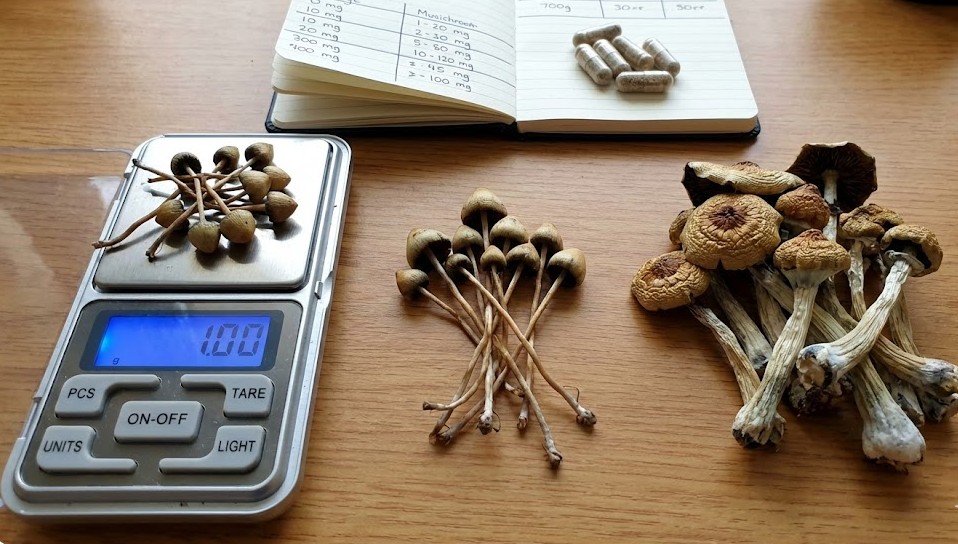
Liberty Caps rank among the most potent psilocybin mushrooms by dry weight. Studies show they average around 1.0% psilocybin content, with documented ranges from 0.2% to 2.37% depending on the specimen.
Compare this to Psilocybe cubensis, the most commonly cultivated species, which typically contains 0.6–0.8% psilocybin. Liberty Caps run roughly 1.5–2 times stronger gram-for-gram.
Validated analytical methods confirm this variability. Finnish studies documented specimens reaching 2.37%, while Pacific Northwest research found consistent averages around 1.0% with low variability. Mycologist Paul Stamets classifies them as “moderately active to extremely potent.”
Dosage adjustments
Because of their higher potency, reduce dosages by 30–50% compared to cubensis guidelines:
Microdose: 0.05–0.15 g dried (sub-perceptual effects) Low/threshold: 0.2–0.5 g dried (mild alterations) Moderate: 0.5–1.5 g dried (full but manageable experience) Standard: 1.0–2.0 g dried (strong, transformative effects) Strong: 2.0–3.0 g dried (intense, potentially overwhelming)
As a rough conversion: 1 gram of dried Liberty Caps equals approximately 1.5–2 grams of dried cubensis in effect intensity.
According to NIDA’s safety guidance, psilocybin has low physiological toxicity but can cause psychological distress, particularly in unsupervised settings. Set and setting matter tremendously for the quality of any experience.
If you’re exploring microdosing with precisely measured products, options like capsules offer consistent dosing without the guesswork of working with raw material.
The name behind the mushroom
The Liberty Cap name connects these mushrooms to one of history’s most enduring symbols of freedom. Understanding this context adds a layer of meaning many find compelling.
The Phrygian cap originated in ancient Anatolia (modern Turkey). Rome adopted it as the pileus, given to enslaved people upon their manumission. Wearing this cap announced to the world: I am free.
After Julius Caesar’s death, supporters of his assassins distributed these caps throughout Rome. They appeared on the famous “Ides of March” coin depicting two daggers flanking a cap—a declaration that Rome had been freed from tyranny.
French revolutionaries made the bonnet rouge their signature headwear. Marianne, the personification of the French Republic, wears one to this day. American colonists raised liberty poles topped with these caps as symbols of their independence movement.
When Mordecai Cubitt Cooke connected this symbolism to these pointed mushrooms in 1871, he tapped into something deeper than physical resemblance. The name endures because it resonates on multiple levels—the shape certainly, but also the expansive potential many associate with the psilocybin experience itself.
Harvard researchers have documented that psilocybin mushrooms were used in Mesoamerica as early as 3,000 years ago. The Nahua called them “teonanácatl,” meaning “flesh of the gods.” Liberty Caps carry their own European heritage of faerie folklore and mystical association.
Current legal status in the United States
Psilocybin remains a Schedule I controlled substance under federal law. The DEA defines Schedule I substances as having “no currently accepted medical use and a high potential for abuse.”
Federal penalties for simple possession can include up to one year imprisonment and a minimum $1,000 fine for first offenses. Manufacturing, cultivation, and distribution carry significantly harsher consequences.
However, the legal landscape has shifted dramatically at the state and local levels.
States with legal supervised use
Oregon became the first state to legalize supervised psilocybin use when voters passed Measure 109 in November 2020. Psilocybin service centers began operating in June 2023. Adults 21 and older can use psilocybin in licensed, supervised settings without a prescription. This isn’t legal for home use—only in regulated facilities.
Colorado followed with Proposition 122 in November 2022. The state decriminalized personal possession, growing, and sharing for adults 21+. Colorado also allows licensed “healing centers” for supervised therapeutic use. As of March 2025, the state issued its first licenses for these facilities. Colorado stands alone in explicitly permitting home cultivation for personal use.
New Mexico joined them in April 2025 when the governor signed the Medical Psilocybin Act. This allows patients with qualifying conditions to access psilocybin under licensed healthcare provider guidance.
Decriminalized cities
Over 30 cities have reduced psilocybin enforcement to “lowest law enforcement priority”:
California: Oakland, Santa Cruz, Arcata, San Francisco, Berkeley, Eureka
Washington: Seattle, Port Townsend, Olympia, Tacoma (January 2025)
Massachusetts: Somerville, Cambridge, Northampton, Easthampton, Amherst, Salem, Medford, Provincetown
Michigan: Ann Arbor, Detroit, Hazel Park, Ferndale, Ypsilanti
Other: Denver (first in the US, 2019), Washington D.C., Portland (Maine), Minneapolis
Decriminalization means reduced enforcement, not legalization. Federal law still applies, and state laws remain unchanged in most cases.
Spore legality
The DEA confirmed in January 2024 that mushroom spores not containing psilocybin or psilocin aren’t controlled substances. Spores don’t contain these compounds until germination occurs.
Three states specifically prohibit spore possession: California, Georgia, and Idaho.
In the remaining 47 states, purchasing and possessing spores remains legal. However, germinating them with the intent to cultivate psilocybin mushrooms constitutes a federal crime.
A 2024 GAO report found that DEA approved 39 new research registrations for psilocybin studies in fiscal year 2022—about 29% of all Schedule I research approvals. Scientific interest continues to grow.
Foraging wisdom and warnings
We’d be doing you a disservice if we didn’t address foraging directly. Liberty Caps grow wild across temperate regions, and some people do seek them out. But this carries real dangers that demand respect.
Why foraging is risky
Several deadly species share overlapping habitats, seasons, and general appearances with Liberty Caps. Documented cases include:
An Austrian man mistook Cortinarius rubellus for Liberty Caps. The result? End-stage kidney failure requiring a transplant. Another case documented serious heart complications following the consumption of misidentified mushrooms.
Multiple fatalities have resulted from confusing Galerina marginata for various Psilocybe species. Liver failure from amatoxin poisoning remains the primary cause.
Dried mushrooms lose many identifying characteristics. Color changes, texture, and even the distinctive nipple become harder to assess. Only identify fresh specimens.
For the experienced
If you possess genuine mycological expertise, identification becomes more reliable—but never certain without microscopy. Key practices include:
Always taking spore prints. Dark purple-brown confirms Psilocybe potential. Rust-brown rules it out and suggests potentially deadly species.
Confirming habitat. Liberty Caps grow only in grass, never on wood. Finding a lookalike on decomposing wood means you’ve found something else entirely.
Using multiple identification features together. No single characteristic definitively identifies Liberty Caps. Cross-reference cap shape, pellicle, stem texture, gill attachment, spore print, and habitat.
When in doubt, discard. No identification is worth your life or liver function.
Seeking expert opinions. Online forums and local mycological societies can help verify identifications through photographs—though they can’t replace hands-on examination.
Polish scientists developed a PCR-based genetic test specifically for P. semilanceata in 2007. The fact that laboratory testing was deemed necessary tells you something about identification difficulty.
Finding your path forward
Whether you’re drawn to Liberty Caps for their fascinating natural history, their therapeutic potential, or pure curiosity, this guide gives you the foundation for informed exploration.
The science continues evolving. Clinical trials explore applications for depression, anxiety, and addiction. States and cities keep updating their legal frameworks. Our understanding of these remarkable fungi deepens with each passing year.
If you’re curious about psilocybin’s potential benefits but want a safer, more controlled approach than wild foraging, measured products offer peace of mind. Our chocolate bars with 70% cacao provide precise dosing in a delicious format. Gummies offer another convenient option with consistent potency in every piece.
For those building a microdosing practice, our 500mg gummies and capsules featuring the Stamets Stack formula (psilocybin combined with lion’s mane and niacin) make daily integration simple and sustainable.Love what you’re learning? Consider joining our Sugar Mama community. You’ll share your sugar with friends while earning rewards—because good things should definitely be shared.